Hand-Distressing Techniques: Using Rasps and Chains to Create a Century-Old Patina

Introduction
There is something profoundly alluring about a piece of furniture that looks as though it has lived a hundred lives. The worn edges, the gentle dents, the subtle scratches—these are not imperfections. They are stories. They speak of elbows resting in the same spot for decades, of children’s toys accidentally striking a table leg, of generations of hands reaching for the same drawer pull.
Thank you for reading this post, don't forget to subscribe!At our factory, we do not simply build furniture—we craft narratives. Through the art of hand-distressing, we transform new, pristine oak and walnut into pieces that feel as though they have been cherished for generations. And at the heart of this transformation lie two deceptively simple tools: the rasp and the chain.
What Is Hand-Distressing?
Distressing is the deliberate, artful process of creating wear patterns on new wood to simulate the natural effects of aging. It is not about destruction—it is about illusion. The goal is not to make furniture look “beat up,” but to make it look lived-in: softened edges, subtle dents, and the kind of quiet character that only time can bestow.
The true art of distressing lies in subtlety. Overdo it, and the piece looks fake. Underdo it, and the effect is invisible. The master craftsman knows exactly where to place each mark, how deep to go, and when to stop.
The Raspberry: Softening the Edges of Time
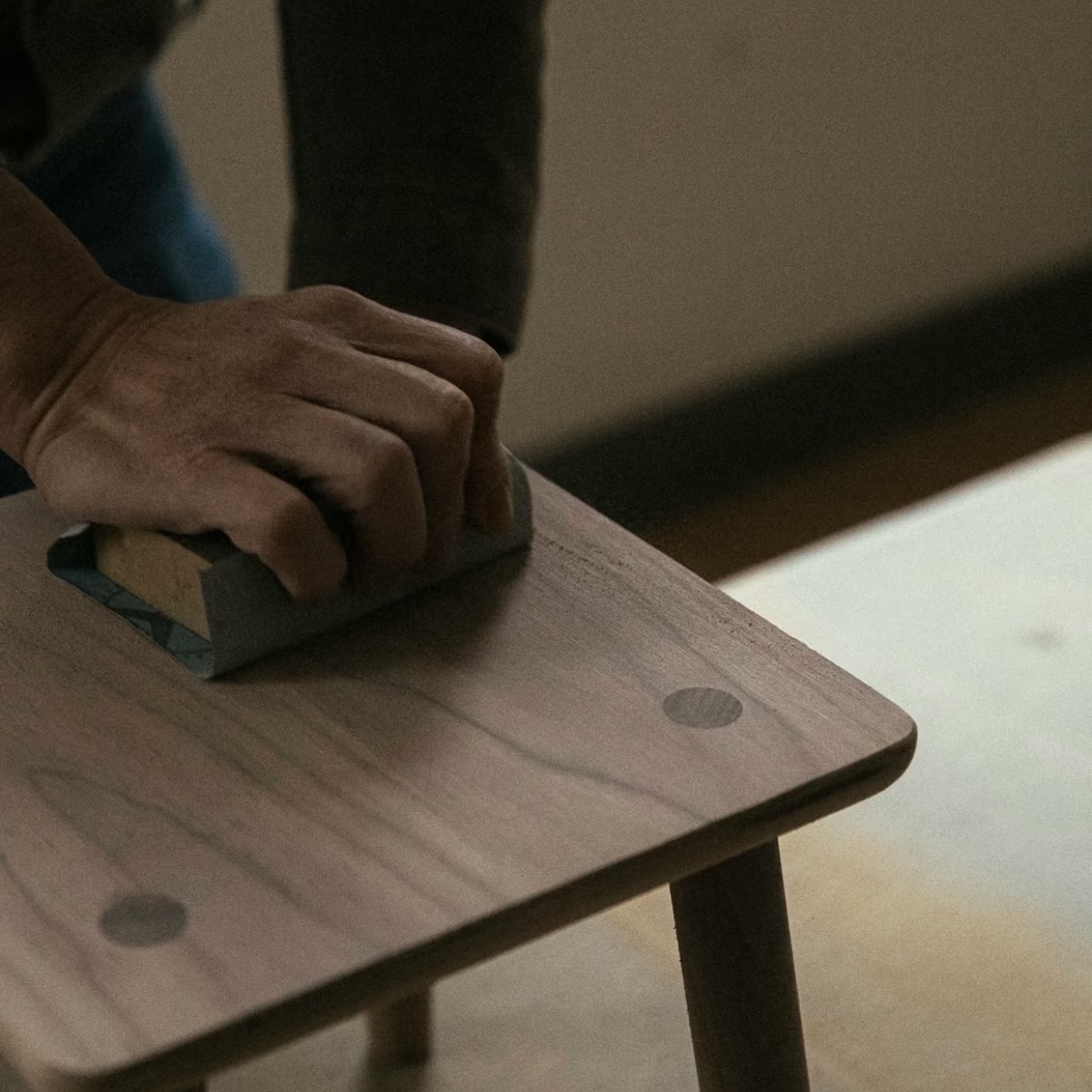
The rasp is perhaps the most essential tool in the distreser’s arsenal. A coarse, toothed file, it is used not to remove large amounts of wood, but to soften—to round off sharp corners, to wear down edges that would naturally receive the most friction over decades of use.
The Philosophy of the Rasp
When a craftsman runs a rasp along the corner of a tabletop, they are not damaging the wood—they are aging it. They are simulating the effect of countless hands brushing past that edge, of sleeves catching on the corner, of years of daily use slowly polishing the sharpness away.
A rasp is typically applied to:
Corners and edges – Where hands naturally grip and rub
Table legs – Where feet and chair legs would have made contact
Chair arms – Where hands have rested for decades
Drawer fronts – Where fingers have pulled thousands of times
The rasp creates what craftsmen call a “cow tail” mark—a distinctive, sweeping wear pattern that mimics the natural smoothing of wood over time.
The Chain: The Poetry of Impact
If the rasp is the gentle hand of time, the chain is the unexpected accident. A length of heavy metal chain, swung against the wood, creates soft-edged dents that look as though something heavy was dropped on the surface.
The Technique
A craftsman typically uses a chain that is 8 to 10 inches long, sometimes attached to a wooden handle. Some artisans add nuts, bolts, or keys to the chain to create a wider variety of mark shapes. The chain is swung, dropped, or dragged across the surface in a random pattern—because real wear is never uniform.
The marks left by a chain are distinctive:
Soft, rounded dents – From the weight of the chain itself
Irregular clusters – From multiple links striking at once
Longer scratches – From dragging the chain across the surface
The key is variation. No two chain marks should look the same. Real furniture does not receive identical dents in identical places. The craftsman must vary the angle, the force, and the placement of each strike to create a natural, organic pattern.
The Full Arsenal: More Tools of the Trade
While the rasp and chain are the stars, a true artisan employs a wide variety of tools to achieve a convincing aged look:
| Tool | Effect |
|---|---|
| Hammer | Distinct half-moon dents from the head; sharper marks from the claw |
| Awl / Ice Pick | Simulated wormholes and insect damage |
| Screwdriver | Small dents, scratches, and gouges |
| Wire Brush | Removes soft grain to create textured, weathered surfaces |
| Gravel / Sand | Scratches and abrasions |
| Keys on a Ring | Irregular scratches and dents |
The Art of Placement: Telling a Believable Story
The difference between a convincing antique and a poorly distressed fake lies in where the marks are placed. A master craftsman thinks like a detective, reconstructing the life the piece has supposedly lived.
Thinking Like a Piece of Furniture
Tabletops – Scratches and dents from heavy serving dishes, dropped utensils, and the occasional slammed book
Table edges – Burnished, smoothed areas where arms have rested for thousands of meals
Legs – Nicks and dings from chairs, benches, and boots brushing against them
Chair arms – Burnished, darkened areas where hands have rested and natural oils have accumulated
The goal is consistency. A piece that looks as though it has been used for a hundred years should show wear in all the places that would naturally receive it—and should show no wear in places that would not.
Before or After Finish? The Critical Decision
One of the most important decisions in distressing is when to apply the damage. This choice determines whether the wear looks authentic or artificial.
If the wear should appear as if it occurred under a finish—meaning the wood itself was worn before it was sealed—the damage must be created directly on the bare wood. If the wear should appear as if it occurred on top of a finish—scratches that happened after the piece was finished—the damage is created after at least one coat of finish has been applied.
For the most authentic look, many craftsmen combine both—creating some wear on bare wood before finishing, and additional wear on the finish itself after.
The Finishing Touch: Glazes, Stains, and Patina
Physical distressing is only half the story. To truly achieve a century-old patina, the physical marks must be enhanced with color.
Glazing
After the distressing is complete and the finish is applied, craftsmen use glazes—translucent layers of color—to settle into the dents, scratches, and crevices. The glaze is applied and then wiped off the high spots, leaving color only in the low areas. This mimics the natural accumulation of dirt and grime that would settle into the worn areas of an antique over decades.
Burnishing
Areas that would have been touched frequently—chair arms, table edges, drawer pulls—are burnished: rubbed with steel wool or an abrasive pad to remove some of the finish and create a subtle sheen. This simulates the polishing effect of human touch over time.
Why Hand-Distressing Matters
In an era of mass production and machine-made uniformity, hand-distressing is a declaration. It says that this piece of furniture was not rushed through a factory line—it was touched by human hands, considered by a craftsman’s eye, and given a soul.
Hand-distressed furniture commands a premium in the market. It is sought after by designers, homeowners, and hospitality clients who understand that authenticity has value. A piece that looks as though it has lived a life is a piece that invites connection. It does not demand perfection—it offers character.
From Our Workshop to Your Home
At our factory, hand-distressing is not an afterthought—it is an art form. Our craftsmen have spent years learning the language of wear: where to rasp, where to chain, where to glaze, where to burnish. They know that a single mark in the wrong place can break the illusion, and that a single mark in the right place can make a piece feel like it has been in a family for generations.
We work primarily with oak and walnut—woods that take distressing beautifully. Their open grain and natural variation provide the perfect canvas for the rasp’s soft curves and the chain’s gentle dents.
Every piece that leaves our workshop carries with it not just the beauty of American hardwood, but the story of a life well-lived—even if that life is only just beginning.
Not just furniture. Heirlooms in the making.
Shop the furniture