Working From Home With American Elegance: Leather Chairs, Desks, and Wall-to-Wall Bookshelves

Part One: The Leather Chair — The Throne of Focus
A home office is only as good as its chair. You will spend more time in this seat than any other piece of furniture in your home. It must support your body, cradle your posture, and invite you to stay—hour after hour, day after day. The leather chair is the American home office’s answer to this challenge.
Thank you for reading this post, don't forget to subscribe!Why Leather?
Leather is not merely a material—it is a relationship. It starts firm and formal, then softens with use, developing a patina that tells the story of hours worked and ideas pursued. A leather chair does not deteriorate; it matures. It becomes more comfortable, more beautiful, more yours with every passing year.
The Classic American Leather Chair
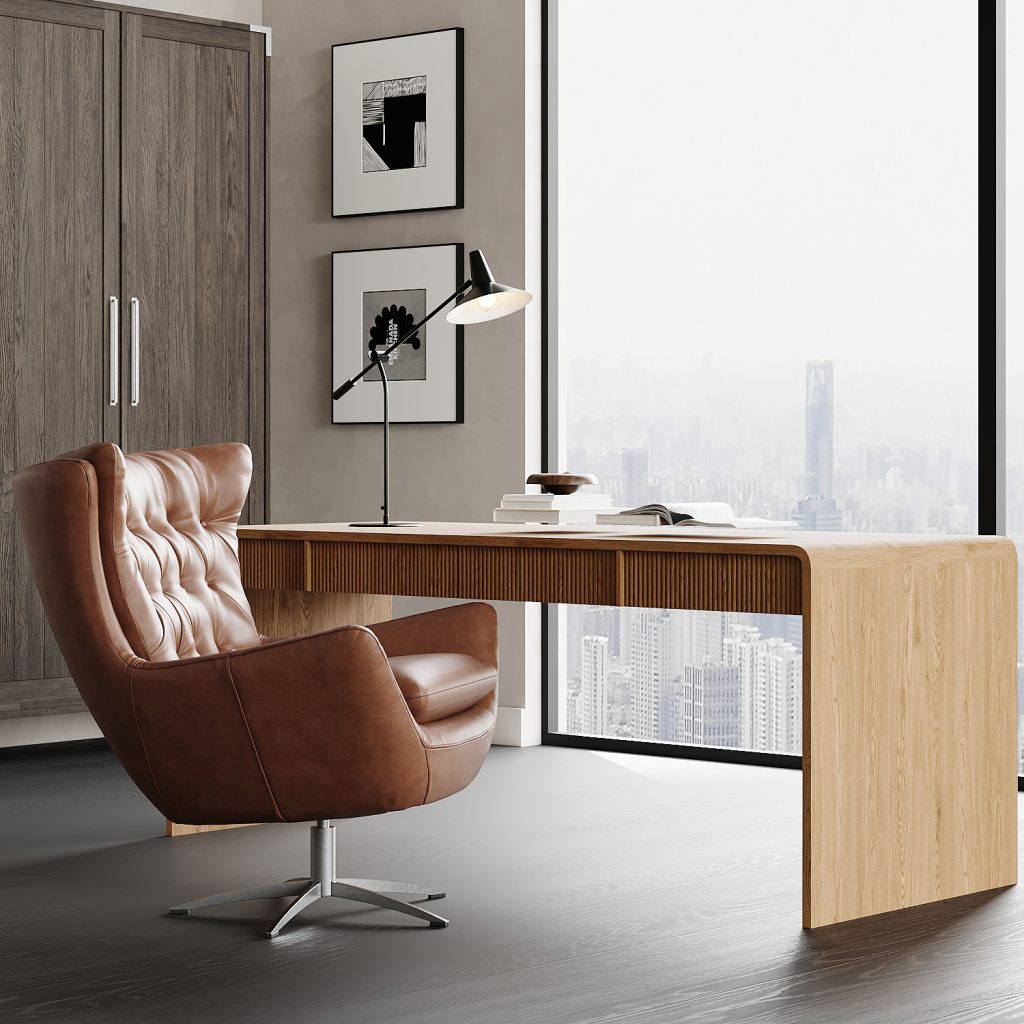
The archetypal American leather chair is the wingback—tall-backed, with projecting “wings” that were originally designed to protect the sitter from drafts and fireplace heat. In the home office, the wingback becomes a throne of focus, its high back and enveloping arms creating a sense of privacy and concentration. Upholstered in rich, top-grain leather, it is a piece that commands respect.
For a more contemporary feel, consider a leather executive chair with a five-point base and adjustable height. Or a leather club chair—lower, wider, more relaxed—for a home office that prioritizes comfort alongside professionalism.
Leather Color and Character
| Leather Tone | Character | Best For |
|---|---|---|
| Cognac / Tan | Warm, inviting, traditional | Oak desks, classic interiors |
| Dark Brown | Serious, masculine, timeless | Walnut desks, formal offices |
| Black | Sleek, modern, authoritative | Contemporary offices |
| Burgundy / Oxblood | Rich, distinguished, academic | Library-style offices |
| Olive / Green | Earthy, calming, unique | Creative studios, nature-inspired spaces |
The Oak or Walnut Frame
Beneath the leather, the chair’s frame should be solid hardwood—oak or walnut. Oak brings warmth and tradition; walnut brings depth and sophistication. Hand-cut joinery, a well-padded seat, and a smooth swivel or tilt mechanism are the marks of a chair built for decades of daily use.
Part Two: The Desk — The Stage of Productivity
The desk is the stage of the home office. It is where the work happens—where the laptop opens, where the notebook fills, where the hands rest between keystrokes. In the American tradition, the desk is not a flimsy table but a substantial piece of furniture, built to last and designed to inspire.
The Classic American Desk
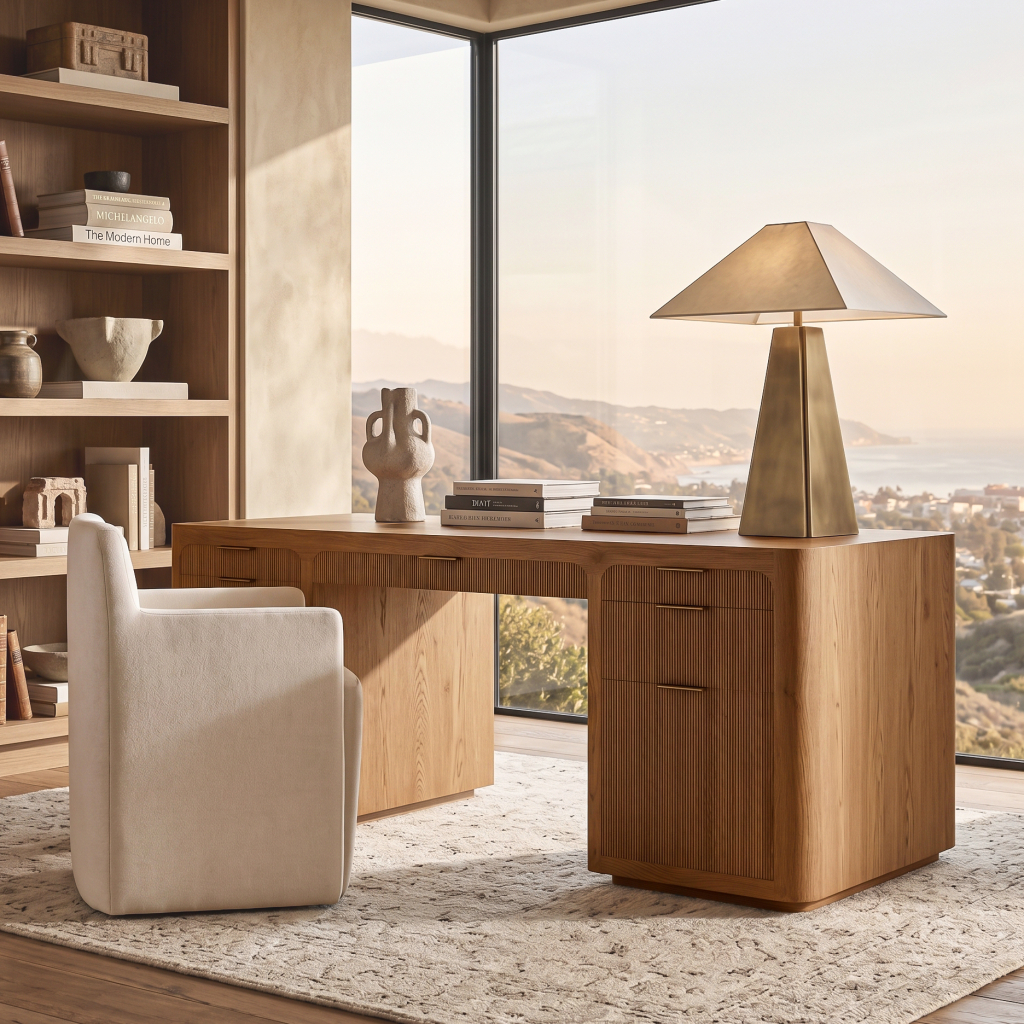
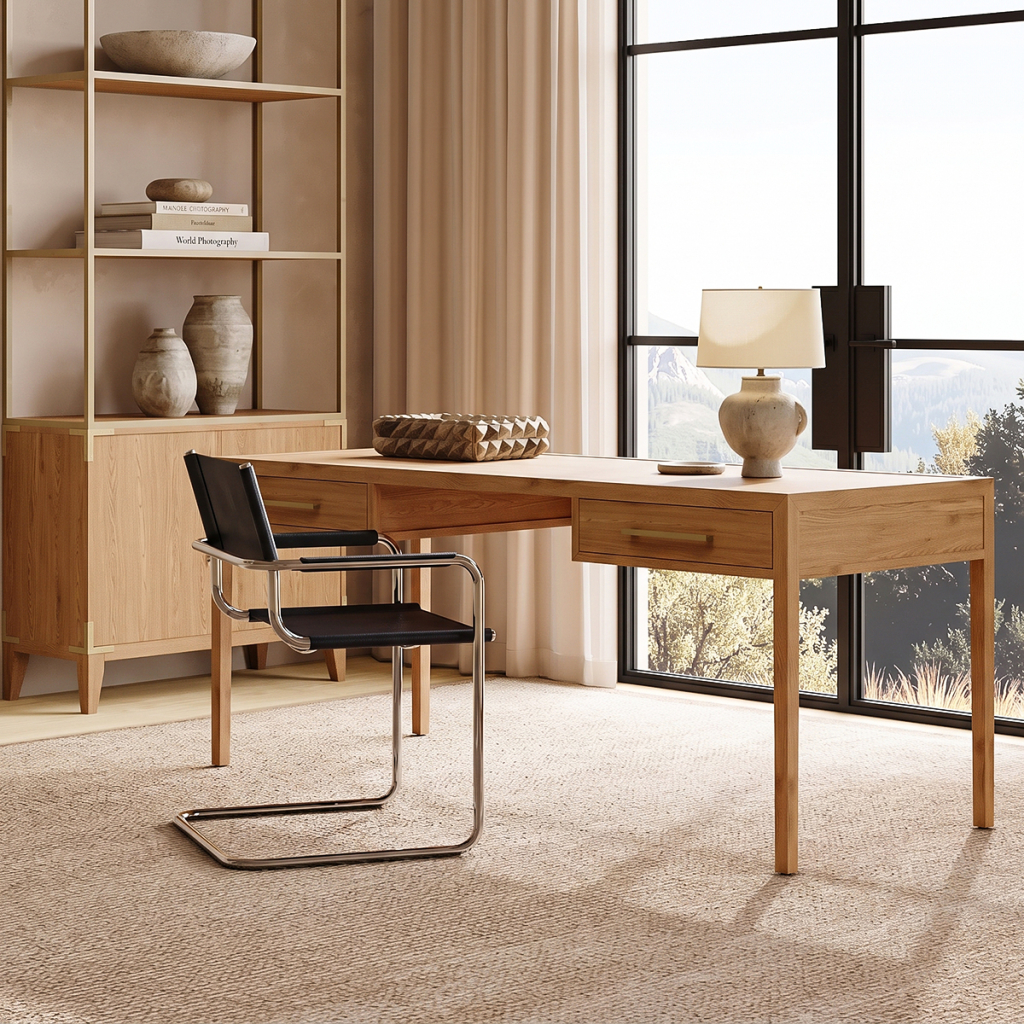
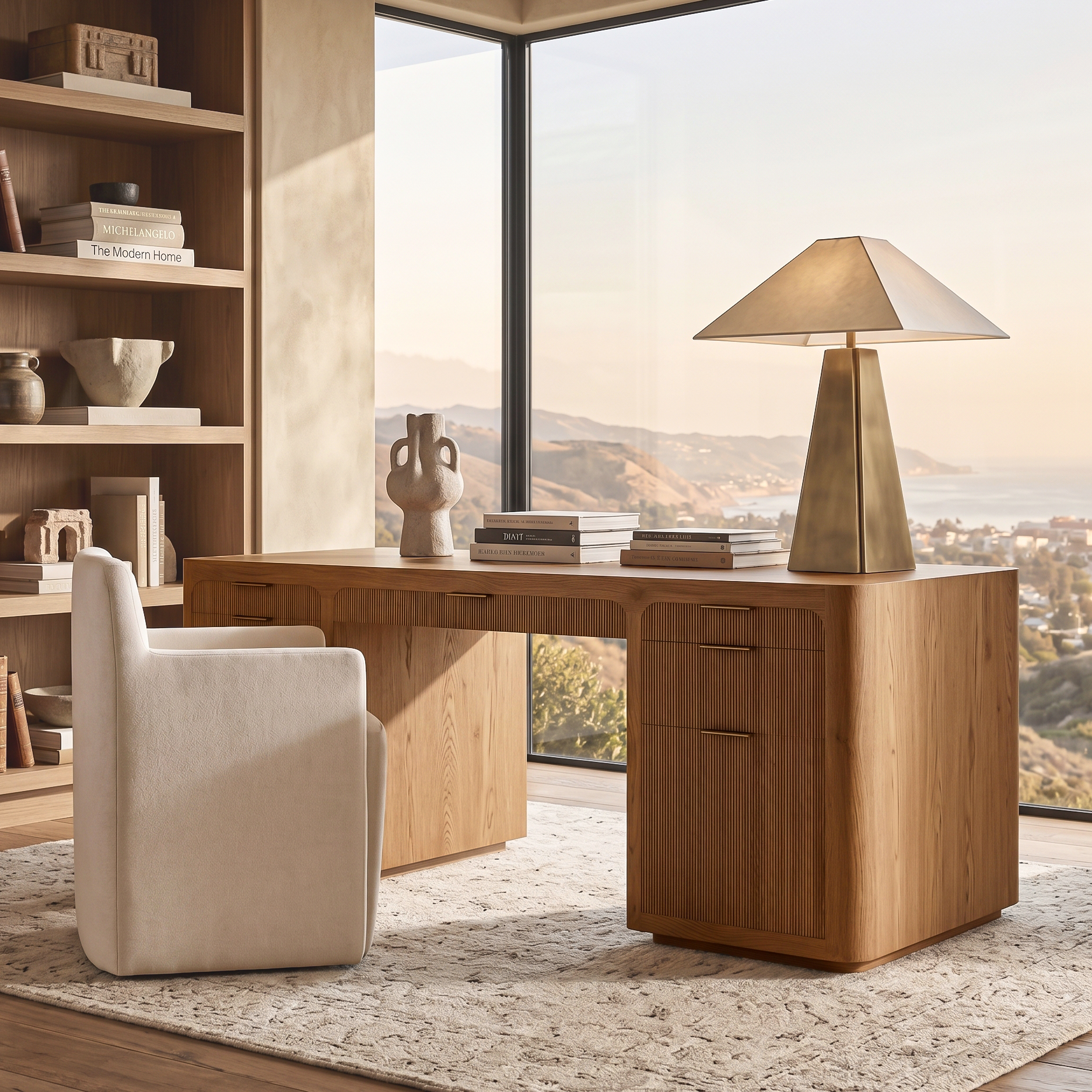
The pedestal desk—with a bank of drawers on each side and a generous work surface—is the archetypal American home office desk. In solid oak, it brings warmth and permanence. In walnut, it brings elegance and gravitas. The writing desk—smaller, with a single drawer and perhaps a leather-inlaid top—is ideal for smaller spaces or for those who prefer a minimalist surface.
The Partner’s Desk
For those who share a home office—or for those who simply want extra space—the partner’s desk is a classic American choice. Originally designed for two people to work facing each other, it now serves as a generous single workspace with drawers on both sides. It is a desk that says: there is room here for big ideas.
What to Look For
| Feature | Why It Matters |
|---|---|
| Solid wood construction | Oak or walnut; durable, beautiful, repairable |
| Dovetailed drawers | Smooth operation, longevity |
| Leather-inlaid top (optional) | Wrting comfort, sophisticated aesthetic |
| Cable management | Keeps the surface clean and organized |
| Adequate depth | At least 30 inches for a monitor and keyboard |
| Hand-cut joinery | Strength and craftsmanship |
The Chair-Desk Relationship
The chair and desk must work together. The desk height should allow the chair’s armrests to slide underneath. The work surface should be at elbow height when seated. The distance from chair to monitor should be arm’s length. These are not minor details—they are the difference between a workspace that supports you and one that slowly wears you down.
Part Three: Wall-to-Wall Bookshelves — The Architecture of Ideas
Nothing says “American home office” quite like wall-to-wall bookshelves. They are not merely storage—they are architecture. They transform a room from a place with a desk into a library, a sanctuary of learning, a space that announces: ideas matter here.
The Built-In vs. Freestanding Debate
| Built-In Bookshelves | Freestanding Bookshelves | |
|---|---|---|
| Aesthetic | Seamless, architectural, permanent | Flexible, movable, versatile |
| Cost | Higher (custom fabrication and installation) | Lower (ready-made options available) |
| Space Use | Maximizes every inch | May leave gaps |
| Flexibility | Fixed once installed | Can be rearranged or relocated |
| Impact | Dramatic, room-defining | Warm, collected, evolving |
At our factory, we specialize in custom built-in bookshelves—crafted from solid oak or walnut, designed to fit your wall exactly, and finished to match your desk and chair. A built-in bookshelf becomes part of the architecture of your home, as permanent and as beautiful as the walls themselves.
The Library Ladder
For bookshelves that reach the ceiling—and they should—a library ladder is both a practical necessity and a romantic flourish. Mounted on a brass or blackened steel rail, a solid wood ladder glides along the shelves, allowing access to the highest volumes. It is a piece that says: this is a collection to be explored.
Styling the Shelves
A wall-to-wall bookshelf is not just for books. It is a composition. Here is how to style it:
Books – The foundation. Arrange by subject, color, or size. Mix horizontal stacks with vertical rows.
Art and Objects – A small sculpture, a framed photo, a ceramic bowl. These break up the rows of books and add visual interest.
Lighting – Small picture lights or LED strips mounted under shelves illuminate the contents and add warmth.
Negative Space – Do not fill every shelf to the brim. Leave some empty space. It allows the eye to rest and makes the collection feel curated rather than cluttered.
A Ladder – For high shelves, a library ladder is both functional and beautiful.
Part Four: The Supporting Cast — Completing the American Home Office
The leather chair, the solid wood desk, and the wall-to-wall bookshelves form the core of the American home office. But a few additional pieces complete the picture.
The Credenza or Filing Cabinet
A credenza behind the desk provides closed storage for files, supplies, and paperwork that would otherwise clutter the workspace. In solid oak, with dovetailed drawers and perhaps a locking file drawer, it is both functional and beautiful.
The Reading Chair
Every home office needs a second chair—a place to sit when you are not working at the desk. A leather club chair in the corner, beside a floor lamp and a small side table, creates a space for reading, thinking, or taking a call in comfort. It is the piece that says: this office is not just for working. It is for being.
The Side Table
A small side table beside the reading chair or at the end of the desk provides a surface for a lamp, a cup of coffee, or a notebook. It is a small piece, but it makes the office feel complete.
The Rug
A rug anchors the home office, defining the workspace and adding warmth underfoot. Choose a rug large enough for the chair to roll easily, and in a color that complements the wood tones of the furniture. A vintage Persian or a simple flat-weave in wool or jute works beautifully in the American style.
The Lighting
Lighting is not an afterthought—it is essential. A home office needs:
Task lighting – A desk lamp with adjustable arm for focused work
Ambient lighting – A floor lamp or table lamp for overall warmth
Accent lighting – Picture lights on bookshelves or art
Natural light – Position the desk perpendicular to the window to avoid glare
Part Five: The Oak and Walnut Palette
In the American home office, the choice of wood sets the tone for the entire space.
Oak — Warmth and Tradition
Oak is the classic American choice. Its warm, honeyed tones and prominent grain bring a sense of permanence and comfort to the home office. An oak desk, oak bookshelves, and an oak chair frame create a workspace that feels grounded and inviting. Oak pairs beautifully with cognac or tan leather, with brass hardware, and with warm, earthy textiles.
Walnut — Elegance and Gravitas
Mixing Woods
You do not have to choose one wood for everything. In fact, mixing oak and walnut can create a beautiful, layered look. An oak desk with walnut bookshelves. A walnut chair with an oak credenza. The key is to create a dialogue between the woods—each one highlighting the other’s unique beauty.
A note on teak: Teak is the king of outdoor furniture, not indoor. Its natural oils and weather resistance make it ideal for poolside and patio, but for the indoor home office, oak and walnut are the American classics.
Part Six: Creating the Atmosphere
The furniture provides the structure. The atmosphere provides the soul. Here is how to make your American home office feel truly special.
Scent
A candle or diffuser with notes of cedar, leather, or tobacco creates a warm, studious atmosphere. Scent is the most underrated element of interior design—it can transform a room’s emotional character in an instant.
Sound
A small speaker playing soft jazz, classical music, or ambient soundscapes can help with focus and create a sense of occasion. The home office should feel like a destination, not a default.
Greenery
A potted plant—a fiddle leaf fig, a snake plant, a small olive tree—brings life to the home office. It softens the hard lines of furniture and shelves, and it reminds us that even in a space of work, life thrives.
Personal Touches
A framed photo of a loved one. A small object from a memorable trip. A piece of art that inspires you. These personal touches make the home office yours—not a generic workspace, but a reflection of who you are and what matters to you.
Part Seven: The Ergonomic Foundation
Beauty without comfort is incomplete. The American home office must also support the body through long hours of work.
The Essentials
| Element | Recommendation |
|---|---|
| Chair height | Feet flat on floor; thighs parallel to ground |
| Desk height | Elbows at 90 degrees when typing |
| Monitor distance | Arm’s length from eyes |
| Monitor height | Top of screen at or slightly below eye level |
| Lighting | Avoid glare; use task lighting for focus |
Movement Matters
Even the most beautiful office can harm the body if you sit still for too long. Stand up every hour. Stretch. Walk to the kitchen for water. The American home office is not a cage—it is a base from which you can move freely.
A Final Thought: A Room That Works as Hard as You Do
The American home office is not a compromise. It is not a corner of the bedroom or a laptop on the sofa. It is a dedicated space—a room that honors the work you do and the person you are. With a leather chair that cradles your body, a solid wood desk that holds your tools, and wall-to-wall bookshelves that inspire your mind, you create a workspace that is both professional and beautiful.
It is a room that says: I take my work seriously. And I take my surroundings seriously too.
Leather. Oak. Books. A room that works as hard as you do.
Shop the furniture