The “Slow-Made” American Way: Why Our Lead Time Is 8 Weeks, Not 8 Days

In a world that prizes speed above almost everything else—same-day delivery, instant streaming, next-day shipping—the idea of waiting eight weeks for a piece of furniture can seem almost radical. Why would anyone wait two months when they could have something in two days?
Thank you for reading this post, don't forget to subscribe!The answer lies in a word that has fallen out of fashion: craftsmanship. And craftsmanship, by its very nature, cannot be rushed.
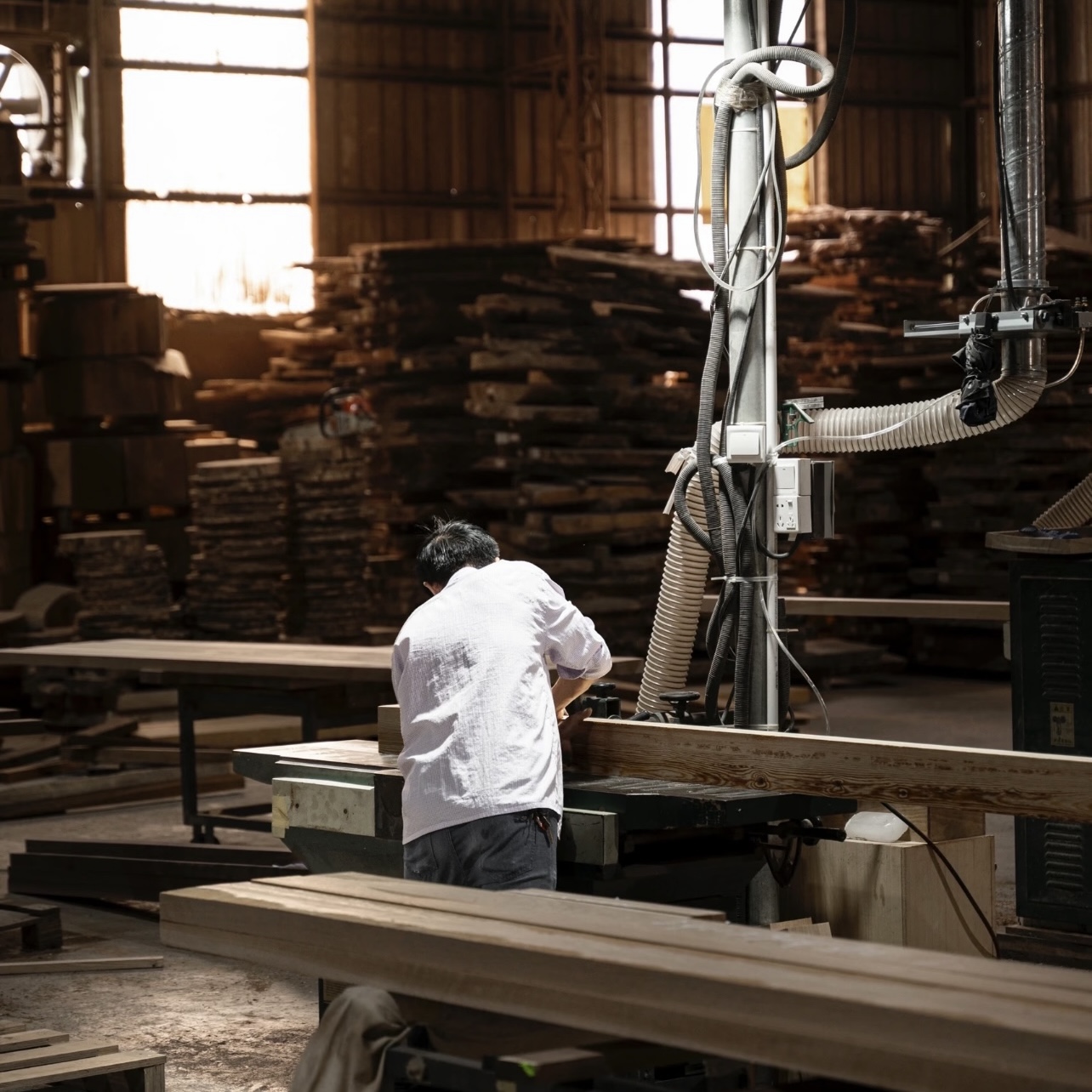
At our factory, we do not measure quality in days. We measure it in stages—each one necessary, each one intentional, each one contributing to a piece of furniture that will last for generations. This is the story of those stages. This is why we choose the “slow-made” American way.
Stage One: Moisture regain in wood — Letting the Wood Adjust
The journey begins not with cutting, but with waiting.
When raw lumber arrives at our factory, it does not go straight to the saw. It goes to the acclimation room—a climate-controlled space where the wood rests, breathes, and adjusts to its new environment. This process, called moisture regain in wood (wood acclimation), is one of the most critical—and most overlooked—stages of furniture making.
Why Does Wood Need to Acclimate?
Wood is a living material. Even after it has been milled and dried, it continues to respond to changes in temperature and humidity. If you cut and assemble wood before it has adjusted to its environment, the finished piece will move—it will warp, crack, or split as the wood continues to expand and contract in its new home.
Acclimation allows the wood to reach equilibrium with the workshop’s climate. This typically takes one to two weeks, depending on the species (oak and walnut require different timings) and the season. In winter, when indoor heating creates dry air, the wood needs more time to adjust. In summer, when humidity is high, the process is different but equally important.
The Eight-Week Clock Starts Here
This is why our lead time begins at eight weeks, not eight days. We cannot—and will not—skip acclimation. To do so would be to sacrifice the stability of the finished piece. And stability is the foundation of everything else.
Stage Two: Manual sanding — The Discipline of Hands
Once the wood has acclimated, it is cut, joined, and assembled. And then the real work begins: sanding.
Sanding is not a single action. It is a progression—a carefully sequenced series of steps that transform rough-sawn timber into a surface that is smooth, even, and alive. At our factory, this progression goes through multiple grits, from coarse to ultra-fine, with each grit removing the marks of the one before it.
The Grit Sequence
| Stage | Grit | Purpose |
|---|---|---|
| First pass | 80–100 | Remove machine marks, level the surface |
| Second pass | 120–150 | Smooth the grain, prepare for finer work |
| Third pass | 180–220 | Refine the surface, remove fine scratches |
| Final pass | 320–400 | Create the “hand-feel”—the silky smoothness that invites touch |
Why Hand-Sanding, Not Machine?
Machine sanding is faster. It is also harsher. A machine sander can round over edges that should stay crisp, or leave swirl marks that only become visible after finishing. Hand-sanding gives the craftsman control—the ability to feel the wood, to adjust pressure, to follow the grain, to know when the surface is truly ready.
The final pass—the 320 to 400 grit stage—is done entirely by hand. This is where the craftsman’s fingers become the most sensitive instruments in the workshop. They can feel imperfections that the eye cannot see. They sand until the surface feels like silk—until it is ready for finish.
The Time Factor
Hand-sanding a single dining table can take six to eight hours. A complete bedroom set can take three to four days. This is time that cannot be compressed. It is time that is invested—not spent.
Stage Three: Versatile Paint Schemes — The Layers of Protection and Beauty
The wood is smooth. The joinery is tight. Now comes the finish—and the finish is where patience is tested most.
The Cycle: Apply, Sand, Repeat
A high-quality finish is not a single coat. It is a cycle—applied, sanded, and repeated multiple times. At our factory, most pieces receive five to seven coats of finish, with a light sanding between each coat.
| Coat | Purpose |
|---|---|
| First coat | Seals the wood; raises the grain |
| Second coat | Fills pores; begins to build depth |
| Third coat | Builds the film; enhances color |
| Fourth coat | Deepens the sheen; adds protection |
| Fifth coat | Final build; prepares for the final sanding |
| Optional sixth/seventh coat | Extra durability for high-use surfaces |
Why So Many Coats?
Each coat of finish does something the previous coat could not. The first coat seals the wood. The second fills the pores. The third builds the film. The fourth deepens the color. The fifth protects. Together, they create a finish that is not just a surface layer—it is a shield that protects the wood from moisture, stains, and daily wear for decades.
The Sanding Between Coats
Between each coat, the surface is lightly sanded—not to remove the finish, but to level it and create a mechanical bond for the next coat. This is delicate work. Sand too little, and the next coat will not adhere properly. Sand too much, and you will cut through the finish and have to start over.
This is why finishing takes time. It is not a single application—it is a rhythm of apply, sand, apply, sand, until the finish is perfect.
The Time Factor
A complete finishing cycle—from first coat to final cure—takes five to seven days for most pieces. For complex pieces with multiple surfaces and details, it can take ten days or more. This is not time that can be accelerated with heat lamps or chemical accelerators. The finish must cure at its own pace.
Stage Four: Air-dry naturally — The Final Patience
The final stage is perhaps the most counterintuitive in a world obsessed with speed: waiting.
After the final coat of finish has been applied, the piece is moved to a drying room—a clean, dust-free, climate-controlled space where it rests. It is not touched. It is not moved. It is not packaged. It simply sits—allowing the finish to cure fully, the solvents to evaporate completely, and the wood to settle into its final state.
Why Natural Drying?
Heat curing and chemical accelerators can speed up the drying process—but they can also compromise the finish. Heat can cause the finish to cure too quickly, trapping solvents beneath the surface and creating a finish that is brittle, prone to cracking, or uneven in sheen. Chemical accelerators can leave residues that affect the final appearance and durability.
Natural drying is slower—but it is also gentler. It allows the finish to cure evenly, the solvents to evaporate completely, and the wood to reach its final equilibrium. The result is a finish that is harder, more durable, and more beautiful than any accelerated process could achieve.
The Time Factor
Natural drying takes three to five days for most pieces. For pieces with multiple coats of finish, or for pieces that will be exposed to harsh conditions, it can take up to seven days. This is the final patience—the last stage of the eight-week journey.
The Eight-Week Equation
| Stage | Time Required |
|---|---|
| Wood Acclimation | 1–2 weeks |
| Cutting, Joining, Assembly | 1–2 weeks |
| Hand-Sanding | 3–4 days |
| Multi-Coat Finishing | 5–7 days |
| Natural Drying | 3–7 days |
| Quality Inspection & Packaging | 1–2 days |
| Total | ~6–8 weeks |
This is why our lead time is eight weeks, not eight days. It is not because we are slow. It is because we are thorough. It is because we believe that furniture is not a disposable commodity—it is an investment in comfort, beauty, and durability.
What “Slow” Really Means
In the American furniture tradition, “slow” is not a criticism. It is a badge of honor. It is a statement that quality cannot be rushed—that the best things in life take time.
Slow Means Stable
Acclimated wood does not warp or crack. It stays true to its shape for decades.
Slow Means Smooth
Hand-sanded surfaces feel like silk. They invite touch. They reflect light evenly. They are a pleasure to live with.
Slow Means Protected
Multi-coat finishes create a shield that protects the wood from moisture, stains, and wear. They do not peel or flake. They do not fade or yellow. They last.
Slow Means Beautiful
Natural drying allows the finish to cure to its full hardness and depth. The result is a surface that is not just a coating—it is a living finish that deepens and enriches with age.
The Alternative: What “Fast” Would Mean
If we wanted to deliver furniture in eight days, here is what we would have to do:
Skip acclimation – Cut and assemble wood before it has adjusted to the environment. Risk: warping, cracking, and instability in the finished piece.
Use machine sanding only – Faster, but harsher. Risk: rounded edges, swirl marks, and a surface that feels “machine-made.”
Apply a single coat of finish – Fast, but thin. Risk: a finish that does not protect the wood, fades quickly, and shows wear within months.
Force-dry with heat or chemicals – Fast, but damaging. Risk: a brittle finish that cracks, peels, or discolors.
We do not make this choice. We never will. Because we believe that furniture should be made to last—not made to ship.
A Final Thought: Time as a Gift
When you receive a piece of furniture from our factory, you are not just receiving a table, a chair, or a cabinet. You are receiving eight weeks of care. You are receiving the time it took to let the wood acclimate. The time it took to hand-sand every surface. The time it took to apply and cure multiple coats of finish. The time it took to let the piece rest and settle into its final state.
This is the “slow-made” American way. It is not the fastest way. It is not the cheapest way. But it is the best way—the way that produces furniture that will be cherished for generations.
Eight weeks. Not eight days. Because quality has a timeline of its own.
Shop the furnitur