The American Home Bar: Stools, Cabinets, and Countertops for Private Entertainment

There is a moment in every great party when the energy shifts. The kitchen quiets. The living room empties. And everyone—glasses in hand—gravitates toward a single corner of the home. That corner is the home bar. It is not merely a place to pour a drink; it is the social engine of the American home, a space designed for mixing, mingling, and the kind of relaxed conversation that only happens when someone is making you a proper cocktail.
Thank you for reading this post, don't forget to subscribe!For homeowners who love to entertain, the home bar is not a luxury—it is a necessity. It allows you to host with confidence, to offer guests something more than a bottle and a glass, and to create an experience that feels intentional, generous, and distinctly American. Let us explore the three essential pieces that make this possible: the bar countertop, the bar stool, and the bar cabinet.
Part One: The Bar Countertop — The Stage of the Home Bar
The bar countertop is the stage of the home bar. It is where drinks are made, where glasses are set down, where guests lean in to watch the pour and to share a story. In the American tradition, the bar countertop is rarely a flimsy afterthought; it is a substantial surface that anchors the entire zone.
Indoor Bars: Oak as the Material of Choice
For indoor home bars—whether a dedicated wet bar, a corner of the living room, or a built-in nook in the basement—solid oak is the classic American choice. Oak’s warm, honeyed tones and prominent grain bring a sense of permanence and hospitality to the bar area. A solid oak bar top does not just hold drinks; it welcomes them. It develops a patina over time, absorbing the tiny marks of celebrations past—a ring from a whiskey glass, the faint imprint of a champagne cork—and growing more beautiful with every gathering.
| Oak Bar Countertop | Benefits |
|---|---|
| Warm, honeyed tones | Creates an inviting, welcoming atmosphere |
| Dense grain | Resists scratches, stains, and daily wear |
| Hand-applied finish | Enhances grain; protects against moisture |
| Timeless character | Ages beautifully; becomes an heirloom |
Outdoor Bars: Teak for the Open Air
For outdoor bars—a poolside cabana, a covered patio, a garden bar—teak is the undisputed material. Teak’s natural oils make it resistant to moisture, rot, and insects, allowing it to withstand the elements while maintaining its structural integrity and beauty. A teak bar countertop on a covered patio creates an outdoor entertainment zone that extends the home’s social space into the open air.
| Teak Bar Countertop | Benefits |
|---|---|
| Natural oils | Resists water, rot, and insects |
| Weather resistance | Withstands sun, rain, and temperature swings |
| Salt resistance | Ideal for coastal homes and poolside bars |
| Graceful aging | Weathers to a distinguished silver-gray patina |
Bar Height vs. Counter Height
The height of the bar countertop determines its function and its feel:
Bar Height (40–42 inches) – The classic standing bar height. Guests stand or sit on tall bar stools. This height creates a lively, social atmosphere—ideal for cocktail parties and mingling.
Counter Height (36 inches) – A slightly lower, more relaxed height. Guests sit on counter stools. This height works well for a home bar that doubles as a breakfast bar or casual dining spot.
Part Three: The Bar Stools — The Seats of Socializing
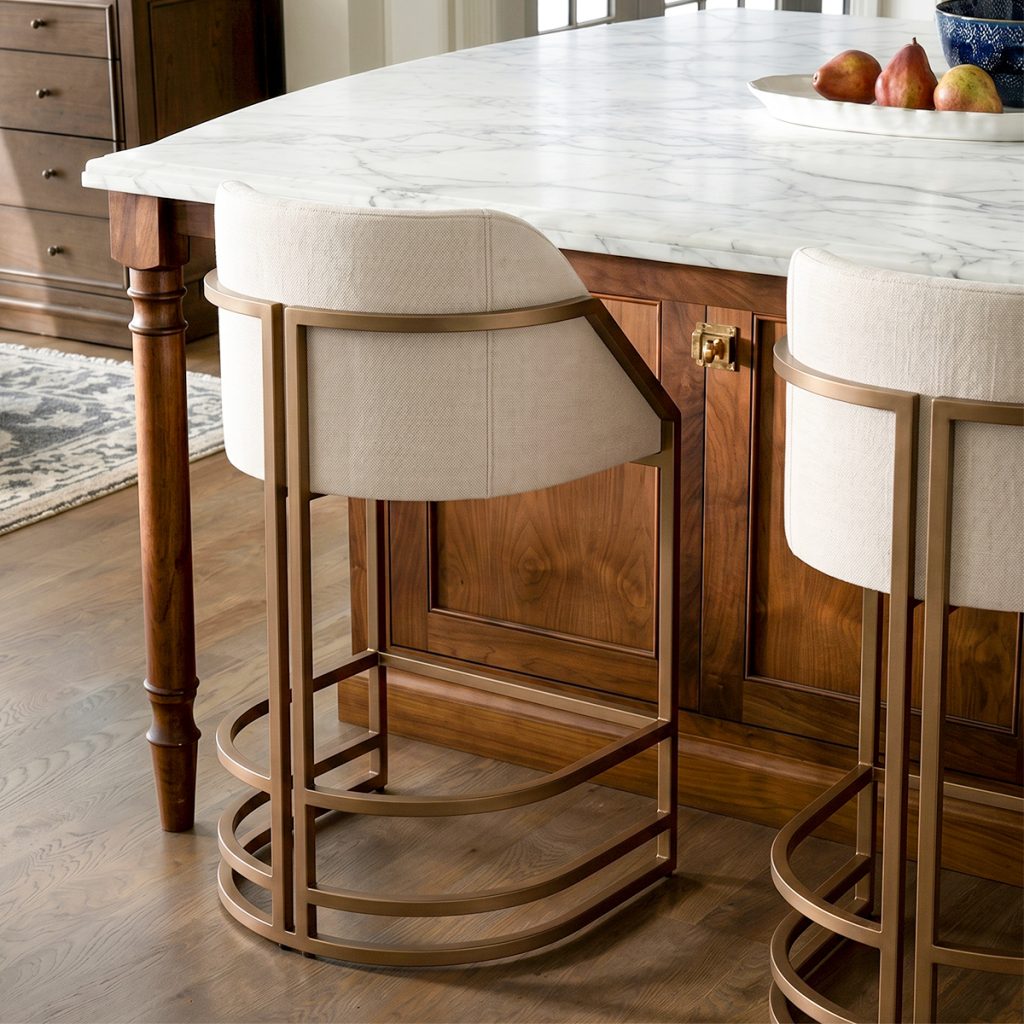
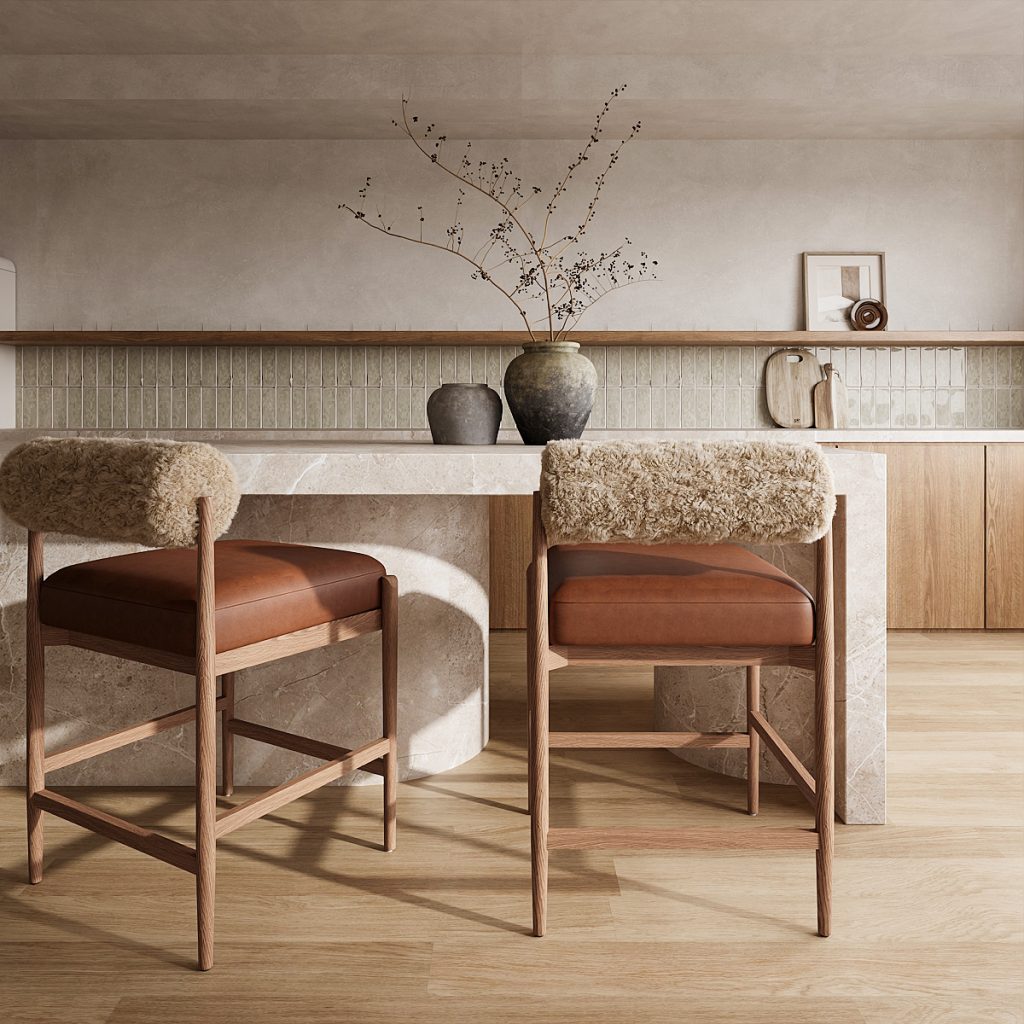
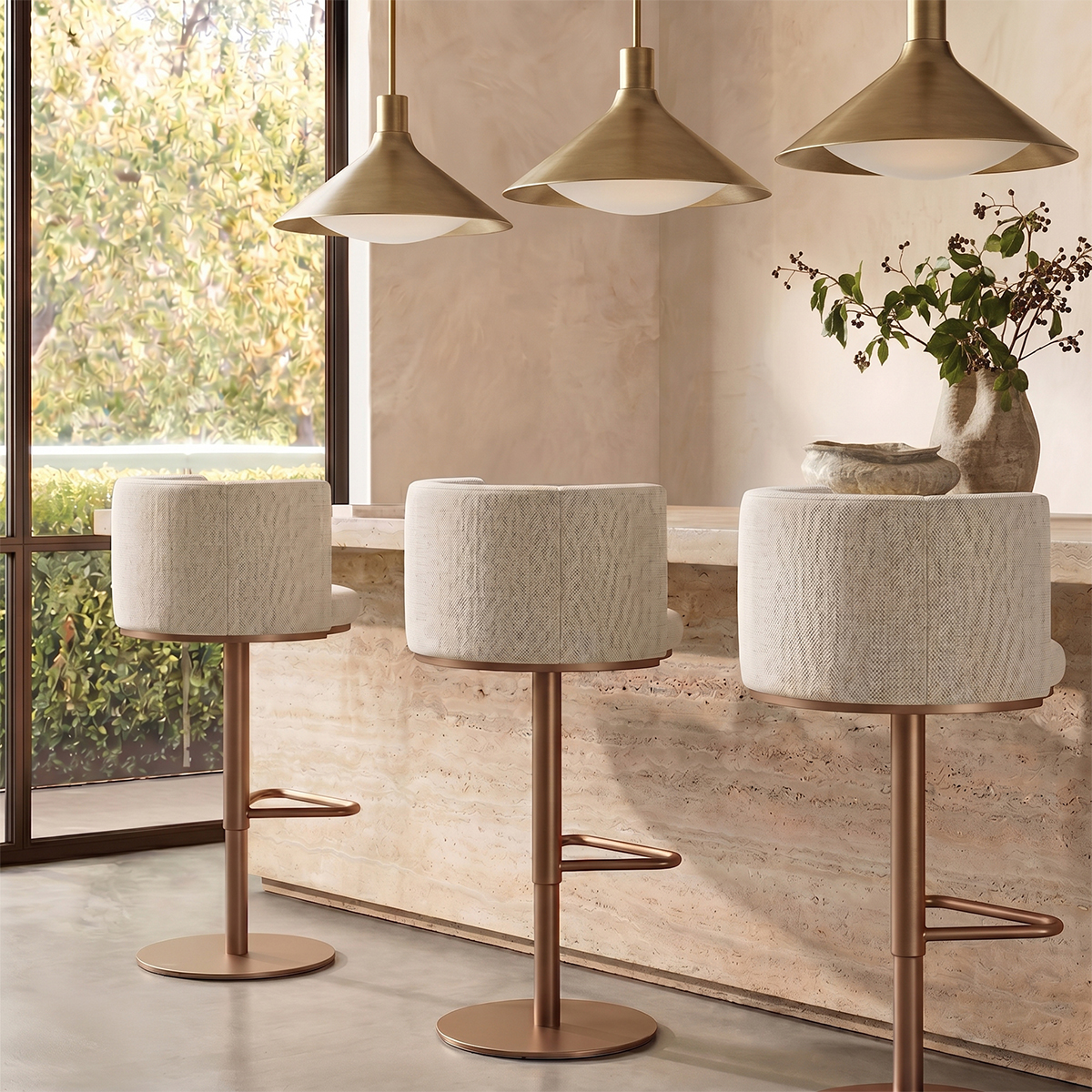
If the countertop is the stage, the bar stools are the audience. They are where guests sit, lean, and linger. A good bar stool is not just a seat—it is an invitation to stay. In the American home bar, the choice of bar stool is a statement of style and comfort.
Leather or Velvet: The Upholstery Choice
The two most popular upholstery choices for American bar stools are leather and velvet. Each offers a distinct aesthetic and tactile experience.
| Upholstery | Character | Best For |
|---|---|---|
| Leather | Rich, masculine, durable; develops a patina | Traditional bars, library-style rooms |
| Velvet | Soft, luxurious, colorful; adds warmth | Glamorous bars, modern American interiors |
Leather bar stools bring a sense of gravitas to the home bar. They are sturdy, easy to clean, and grow more handsome with age. Velvet bar stools, on the other hand, bring a touch of drama and softness. They invite touch and add a layer of luxury that makes the bar feel like a destination.
The Oak Frame
Regardless of upholstery, the finest bar stools feature solid oak frames. Oak’s strength ensures the stool can withstand the weight and movement of guests, while its warm tones complement both leather and velvet. Hand-cut joinery and a well-placed footrest—essential for comfort at bar height—are the marks of a stool built to last.
Height and Proportion
Bar stools must match the height of the countertop. For a 42-inch bar height, choose stools with a seat height of 28–30 inches. For a 36-inch counter height, choose stools with a seat height of 24–26 inches. The stool should allow the sitter’s feet to rest comfortably on the footrest, with knees at a natural angle—not dangling, not cramped.
Part Four: The Bar Cabinet — The Cellar and the Showcase
The bar cabinet is the storage and display piece of the home bar. It is where bottles are kept, glasses are arranged, and the tools of the trade—shakers, strainers, bottle openers—are organized. In the American tradition, the bar cabinet is often a statement piece, combining closed storage with open display.
The Solid Oak Bar Cabinet
A solid oak bar cabinet brings warmth, tradition, and a sense of permanence to the home bar. It can be a freestanding piece—a handsome armoire with glass doors and a built-in wine rack—or a custom built-in that becomes part of the room’s architecture.
Key features of a well-designed bar cabinet include:
Glass doors – For displaying bottles and glassware
Interior lighting – To make the contents glow
Wine racks – Angled storage for bottles
Drawers – For bar tools, napkins, and accessories
A work surface – For mixing drinks
Locking storage – For valuable spirits
Open Shelving and Bar Carts
Not every home bar requires a full cabinet. For smaller spaces or a more casual aesthetic, open shelving in oak or a bar cart can serve the same purpose with a lighter footprint. A brass-finished bar cart with oak shelves, stocked with a few select bottles and a cocktail shaker, brings a sense of spontaneous hospitality to any corner of the home.
Part Five: The Outdoor Bar — Teak for Open-Air Entertainment
For homeowners who love to entertain outdoors, an outdoor bar extends the social zone beyond the walls of the home. And for outdoor bars, teak is the material of choice.
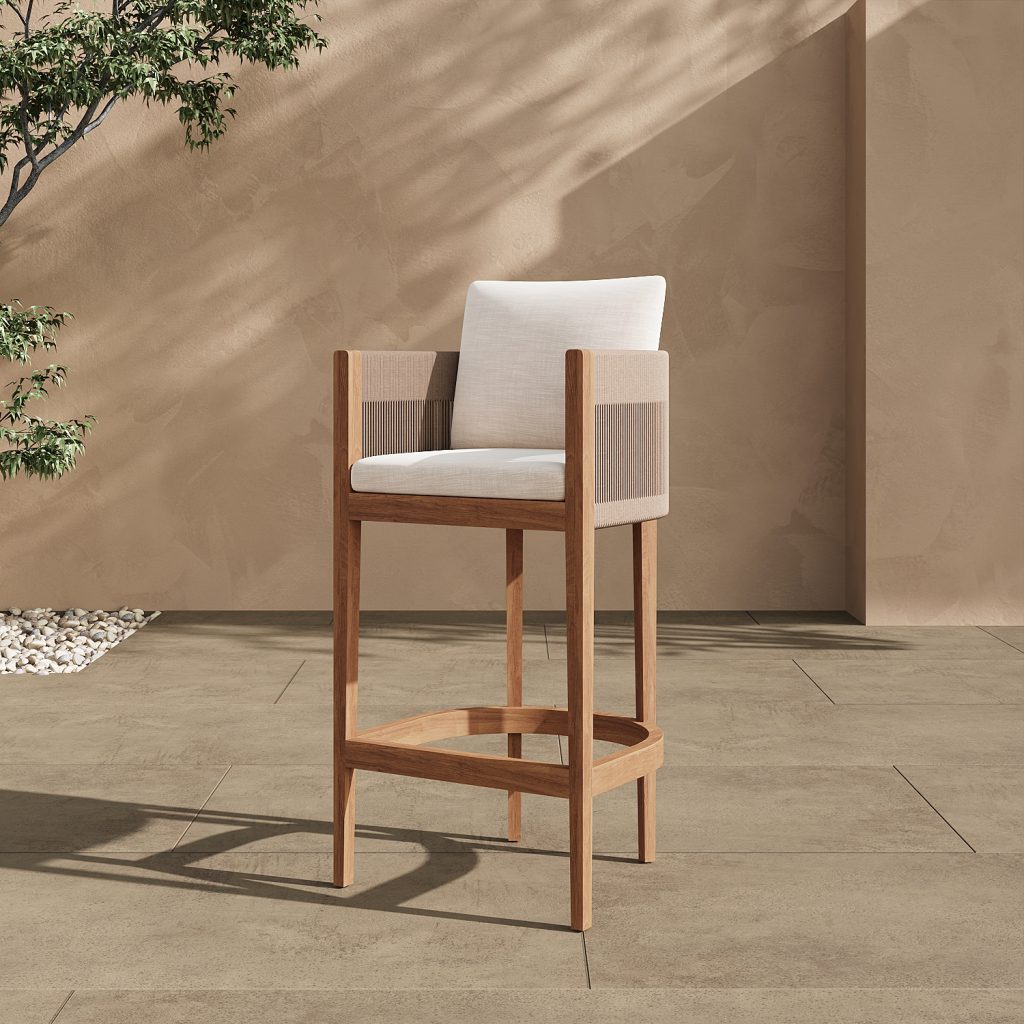
A teak bar countertop paired with teak bar stools (with quick-dry cushions in weather-resistant fabric) creates a poolside or patio bar that can withstand sun, rain, and salt air. Teak’s natural oils protect it from moisture and insects, while its golden-brown tones bring warmth to the outdoor setting. Over time, teak weathers to a silver-gray patina—a look that many designers consider even more beautiful than the original.
Part Six: Layout and Atmosphere
The furniture is in place. Now, how do you arrange it?
Layout Principles
Keep the bartender in the conversation. The person making drinks should not be isolated behind a wall. An open bar layout—where the counter faces the seating area—allows the host to participate while pouring.
Allow for flow. Guests should be able to approach the bar, order a drink, and step away without crowding. Leave at least three feet of clearance behind the stools.
Create zones. A home bar can include a standing area for mingling and a seated area for quieter conversation. Use rugs or lighting to define these zones.
Atmosphere
Lighting – Layered lighting is essential. Pendant lights above the bar, under-cabinet lighting on the countertop, and a dimmable lamp in the corner create a warm, inviting glow.
Accessories – A brass ice bucket. A crystal decanter. A set of vintage cocktail glasses. These details make the bar feel curated rather than utilitarian.
Art and Mirror – A mirror behind the bar reflects light and makes the space feel larger. A piece of art or a framed vintage poster adds personality.
A Final Thought: The Fire That Gathers
A home bar is not about drinking. It is about hosting. It is about the pleasure of making someone a drink exactly the way they like it. It is about the quiet ritual of pouring a nightcap after the guests have gone home. It is about creating a space in your home that says: you are welcome here. Stay a while. Let me make you something.
With a solid oak countertop indoors, a teak bar for the patio, leather or velvet stools, and a well-stocked cabinet, your home bar becomes more than a piece of furniture—it becomes the heart of your entertainment, the place where memories are mixed, poured, and shared.
Raise a glass. Gather your people. The bar is open.
Shop the furniture