Gathering Around the Hearth: Furniture Arrangement for American Fireplace Zones

There is a reason the fireplace has been called the “heart of the home” for centuries. It is not just a source of warmth—it is a magnet. On a chilly evening, the hearth draws people in. It softens voices, slows conversations, and creates the kind of quiet intimacy that no other architectural feature can replicate. In the American home, the fireplace zone is not merely a place to sit; it is a place to gather.
Thank you for reading this post, don't forget to subscribe!Arranging furniture around a fireplace is an art form—one that balances comfort, conversation, and the visual weight of the hearth itself. When done well, the fireplace zone becomes the warm core of the family room, a space where people naturally gravitate and linger. Let us explore how to achieve this with thoughtful furniture selection and intentional layout.
Part One: The Philosophy of the Hearth
In American interior design, the fireplace is rarely treated as just another wall feature. It is the focal point—the visual and emotional anchor of the room. Whether it is a grand stone hearth in a mountain lodge or a simple brick fireplace in a suburban family room, the fireplace commands attention.
The goal of furniture arrangement is not to compete with the fireplace, but to frame it. The seating should acknowledge the hearth as the center of the composition, creating a conversation area that faces toward—or wraps around—the fire. This is the essence of the American fireplace zone: a space designed for connection, with the fire as its quiet, glowing host.
Part Two: The Four Pillars of Fireplace Furniture
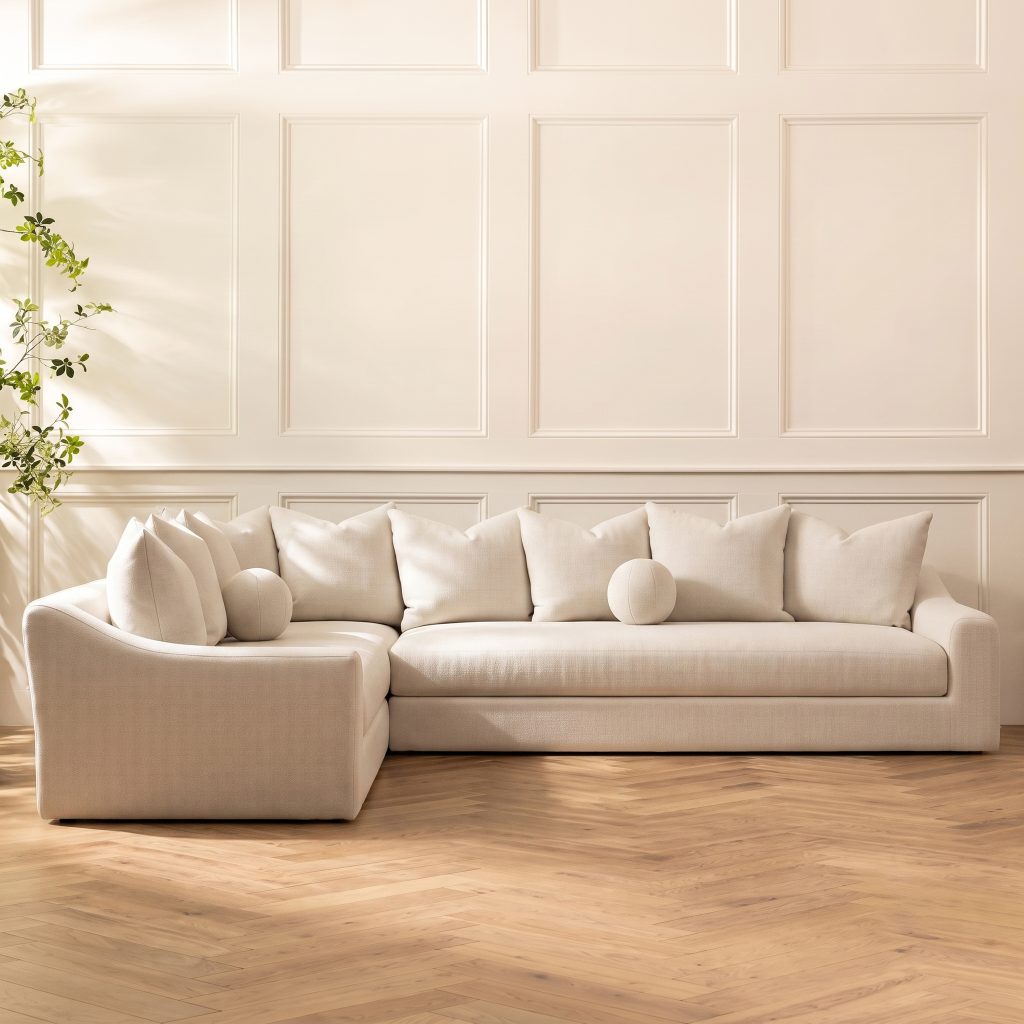
1. The Sofa — The Anchor
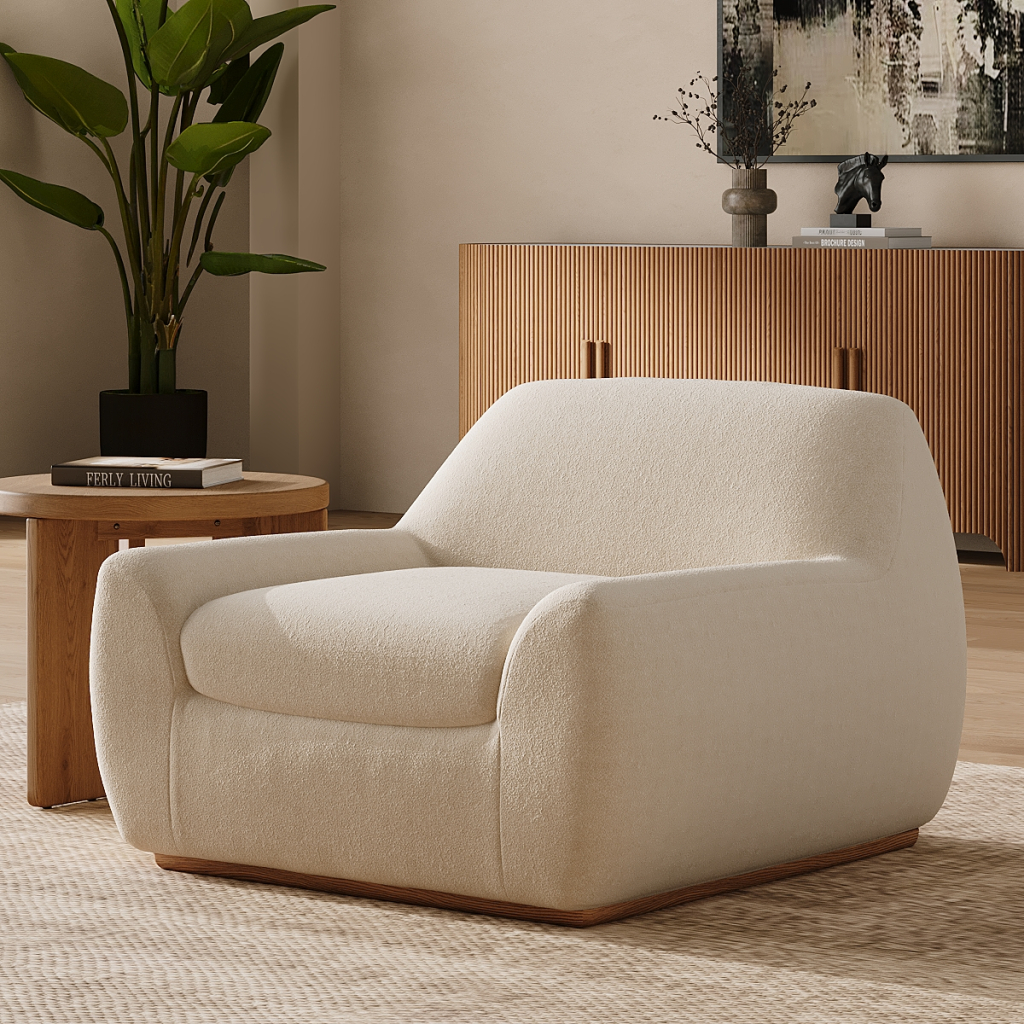
2. The Armchairs — The Framers
3. The Coffee Table — The Connector
The coffee table sits at the center of the seating arrangement, bridging the gap between sofa and chairs. It is where drinks rest, books are set down, and feet occasionally find their way. A solid wood coffee table—particularly in oak—grounds the space with warmth and substance. The coffee table should be proportionate to the seating around it; it is the piece that connects the arrangement into a unified whole.
4. The Side Table — The Quiet Support
Side tables are the unsung heroes of the fireplace zone. Positioned beside armchairs or at the ends of the sofa, they provide a surface for a lamp, a cup of tea, or a reading glass. They are small in scale but essential in function—the pieces that make the space feel complete rather than sparse.
Part Three: Oak and Teak — Indoor and Outdoor Roles
In the American furniture tradition, the choice of wood is never arbitrary. Each species serves a specific purpose, and understanding these roles is key to creating a cohesive fireplace zone.
Oak — The Soul of the Indoor Hearth
Oak has long been the backbone of American furniture making. Its warm, honeyed tones and prominent grain bring a sense of permanence to the fireplace zone. An oak coffee table, a pair of oak side tables, or an oak-framed sofa—these pieces anchor the indoor hearth with natural warmth and classic American character.
Oak belongs indoors, where its beauty can be preserved and its integrity protected. Its dense grain resists the wear of daily use, and over time, it develops a rich patina that only deepens the warmth of the hearth.
Teak — The Outdoor Extension
While oak anchors the indoor fireplace zone, teak extends the warmth outdoors. For homes with fire pits, outdoor fireplaces, or covered patios, teak furniture brings the same gathering spirit to the open air. Teak’s natural oils make it resistant to moisture, rot, and insects—qualities that allow it to thrive in outdoor environments where oak would not survive.
A teak coffee table beside an outdoor fire pit, or a teak dining set on a covered patio, creates an outdoor version of the fireplace zone—a place to gather under the stars, with the fire as the center of attention.
Part Four: Three Classic Layouts for the Fireplace Zone
The right layout depends on the shape of your room and the size of your seating. Here are three time-tested approaches.
1. The Symmetrical Arrangement
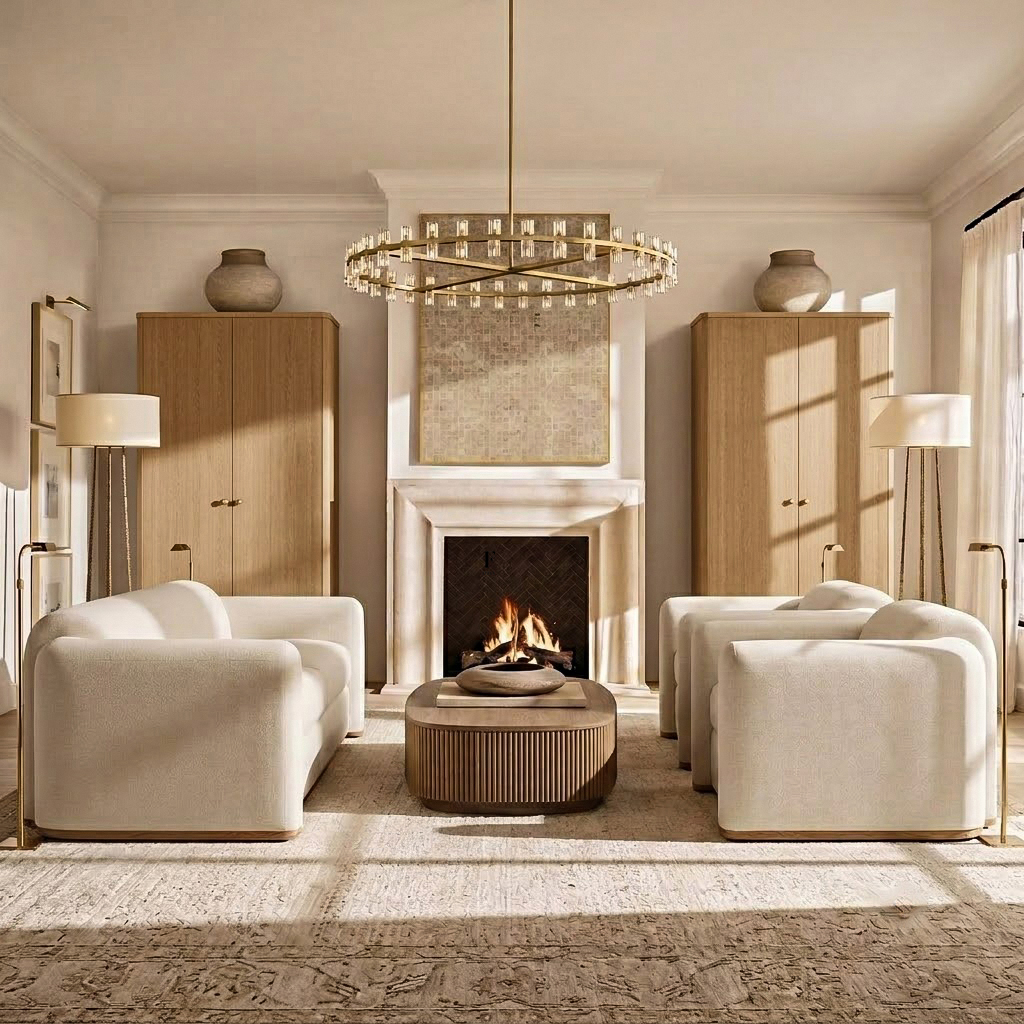
This is the classic American fireplace layout: a sofa facing the hearth, with a matching pair of armchairs flanking the fireplace on either side. A coffee table sits at the center. This arrangement creates a harmonious, formal feel and makes the fireplace the undeniable focal point. It works best in medium-to-large rooms with a centered fireplace.
2. The L-Shaped Configuration
For wider rooms or open-plan spaces, an L-shaped configuration often works better. Place the sofa parallel to the fireplace wall and position an armchair at a right angle, leaving the third side open to the rest of the space. This invites movement through the room while still gathering the seating around the hearth. A coffee table placed slightly off-center between the sofa and the fireplace prevents the layout from feeling too stiff.
3. The Round Seating Cluster
For a more informal, intimate feel, consider a round seating cluster. Four armchairs—or a mix of chairs and a small loveseat—arranged around a round coffee table, all oriented toward the fireplace. A circular rug anchors the group. This layout encourages conversation from every angle and works particularly well in smaller spaces or rooms with corner fireplaces.
Part Five: The Finishing Layers
Furniture alone does not make a fireplace zone feel complete. The finishing layers—the rug, the lighting, the accessories—are what turn a furniture arrangement into a room.
The Rug — Drawing It Together
A rug under the seating area immediately links the sofa, chairs, and coffee table into one composition. Choose a rug large enough for the front legs of every seat to rest on it, ideally with the back legs of the sofa also touching the edge. The rug can echo the color of the fireplace stone, the warmth of the mantel timber, or the tones of the upholstery—quietly tying the whole arrangement to the hearth.
Lighting — Layering the Glow
The fireplace provides the primary glow, but it should not be the only light source. Table lamps on side tables and a floor lamp beside an armchair create layered lighting that softens the room and makes it feel inhabited. When the fire burns low, these lamps take over, extending the usability of the space into the late evening.
The Mantel — The Crown
What sits above the mantel matters as much as the seating below. A large mirror or a single piece of art works better than a row of smaller items, which can compete with the fireplace itself. The mantel should frame the fireplace, not clutter it.
Part Six: Mind the Distance
Comfortable conversation happens at around two to three meters between facing seats. If the sofa sits too close to a working fire, it becomes too warm in winter and too dominant in summer. As a guide, leave at least one meter between the front of the hearth and the nearest piece of upholstery. This also creates a safe zone for sparks and gives a clear path across the room.
A Final Thought: The Fire That Gathers
The fireplace zone is more than a seating arrangement—it is a philosophy of home. It says that this is a place where people matter more than screens. Where conversation is the main event. Where the fire provides not just warmth, but witness—to stories told, to laughter shared, to quiet moments of simply being together.
With a thoughtful arrangement of sofa, armchairs, coffee table, and side tables—grounded in the warmth of oak indoors and extended by the durability of teak outdoors—your fireplace zone becomes exactly what it was always meant to be: the heart of the home.
Build the fire. Arrange the seats. Let the gathering begin.
Shop the furniture