First Impressions: The Art of Entryway Consoles, Mirrors, and Benches in American Style

The front door opens. You step inside. And for three seconds—before you see the living room, before you smell what is cooking, before anyone calls out a greeting—you experience the entryway. This small, transitional space does more work than any other room in the house. It receives you when you return. It sends you off when you leave. It is the first thing guests see and the last thing they remember.
Thank you for reading this post, don't forget to subscribe!And yet, the entryway is the most overlooked room in the American home. We spend fortunes on kitchens and master suites, but the space that actually greets us every single day is often an afterthought—a jumble of shoes, a hook for coats, and perhaps a small table that collects mail and keys.
It does not have to be this way. With three essential pieces of furniture—the console table, the bench, and the mirror—and a few thoughtful additions like a coat rack and a lamp, your entryway can become a space that is both functional and beautiful, a proper prelude to the rest of your home.
Part One: The Console Table — The Anchor of the Entryway
If the entryway is a stage, the console table is its anchor. It is the piece that defines the space, provides a surface for daily essentials, and sets the tone for the entire home. In the American style tradition, the console table is neither too grand nor too modest—it is substantial enough to command attention, yet restrained enough to feel welcoming.
What to Look For
Material
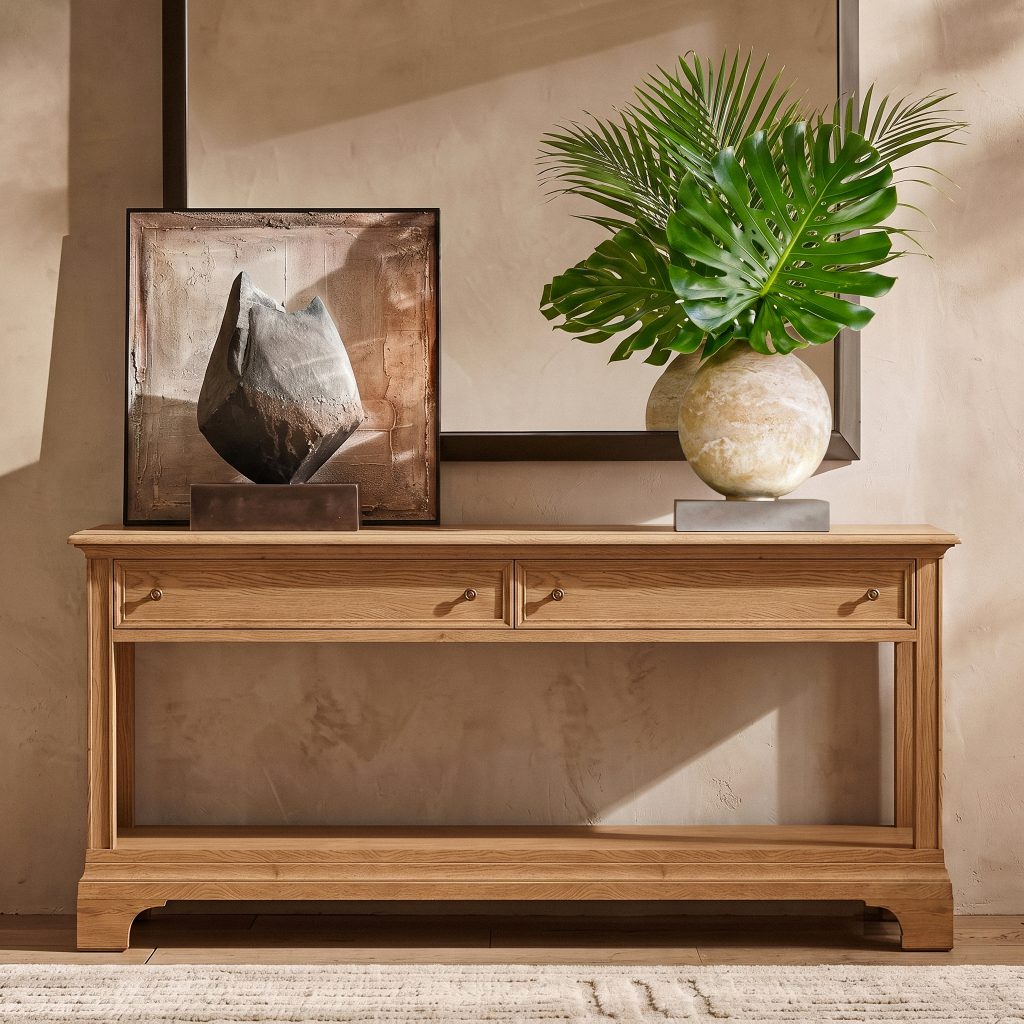
In the American tradition, solid oak is the classic choice. Its warm, honeyed tones and prominent grain bring a sense of permanence to the entryway. A solid oak console table is not just a place to drop your keys—it is a piece that says this is a home of substance. For a lighter, more coastal feel, white oak or a painted finish can work beautifully. For a more formal entry, walnut offers a darker, richer presence.
Detail
The finest console tables reveal their quality in the details: hand-cut joinery, dovetailed drawers, turned legs or a gracefully shaped apron, and hardware that feels solid in the hand. These are not decorative flourishes—they are signs that this piece was made to last.
What It Does
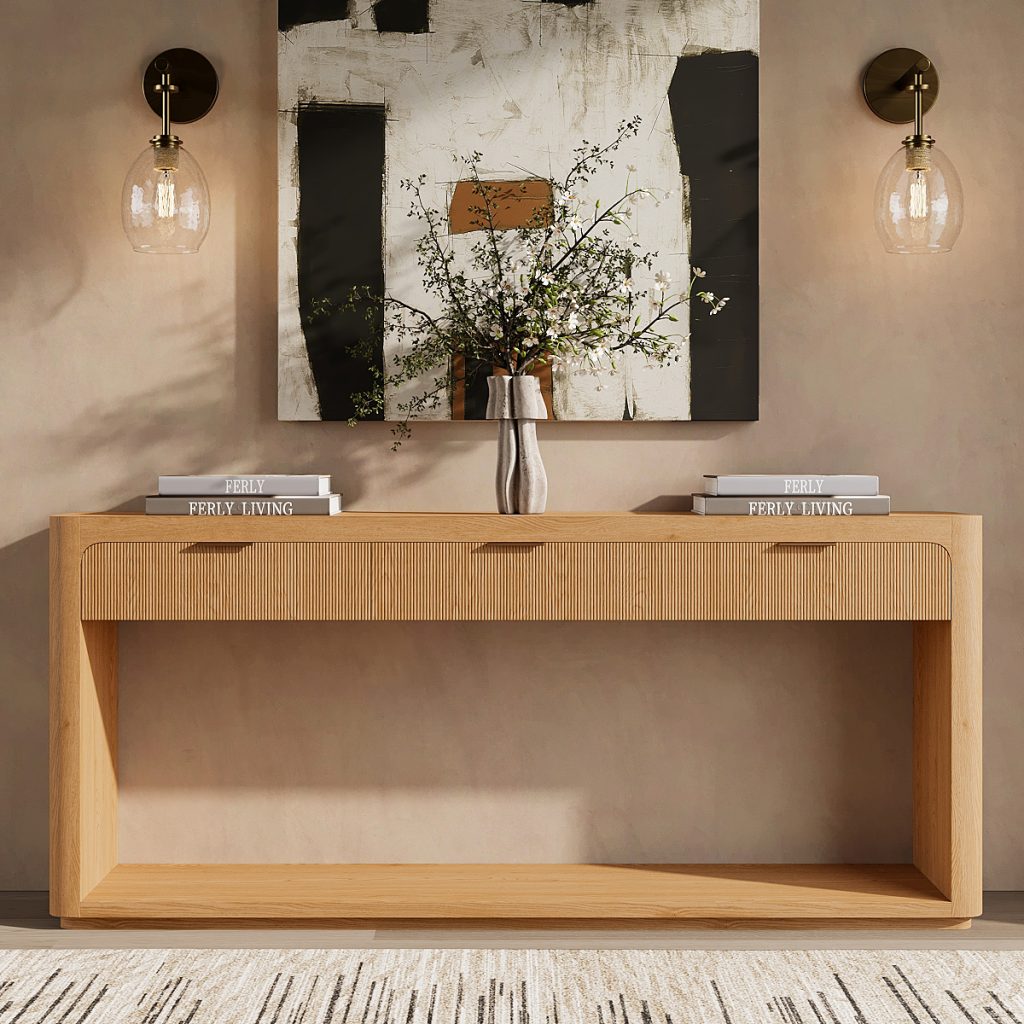
A console table is not a storage unit—it is a surface. It holds the things you need as you leave: keys, sunglasses, a wallet, a to-do list. It holds the things you set down as you arrive: mail, a bag of groceries, a cup of coffee you are still finishing. And it holds the things that simply make the space feel finished: a lamp, a vase of flowers, a bowl for loose change.
Part Two: The Entryway Bench — The Seat of Welcome
The console table anchors the space. The bench grounds it. There is something profoundly human about a place to sit when you enter a home—a moment to pause, to untie your shoes, to gather yourself before stepping into the rest of the house. The American entryway bench offers exactly that: a seat of welcome.
What to Look For
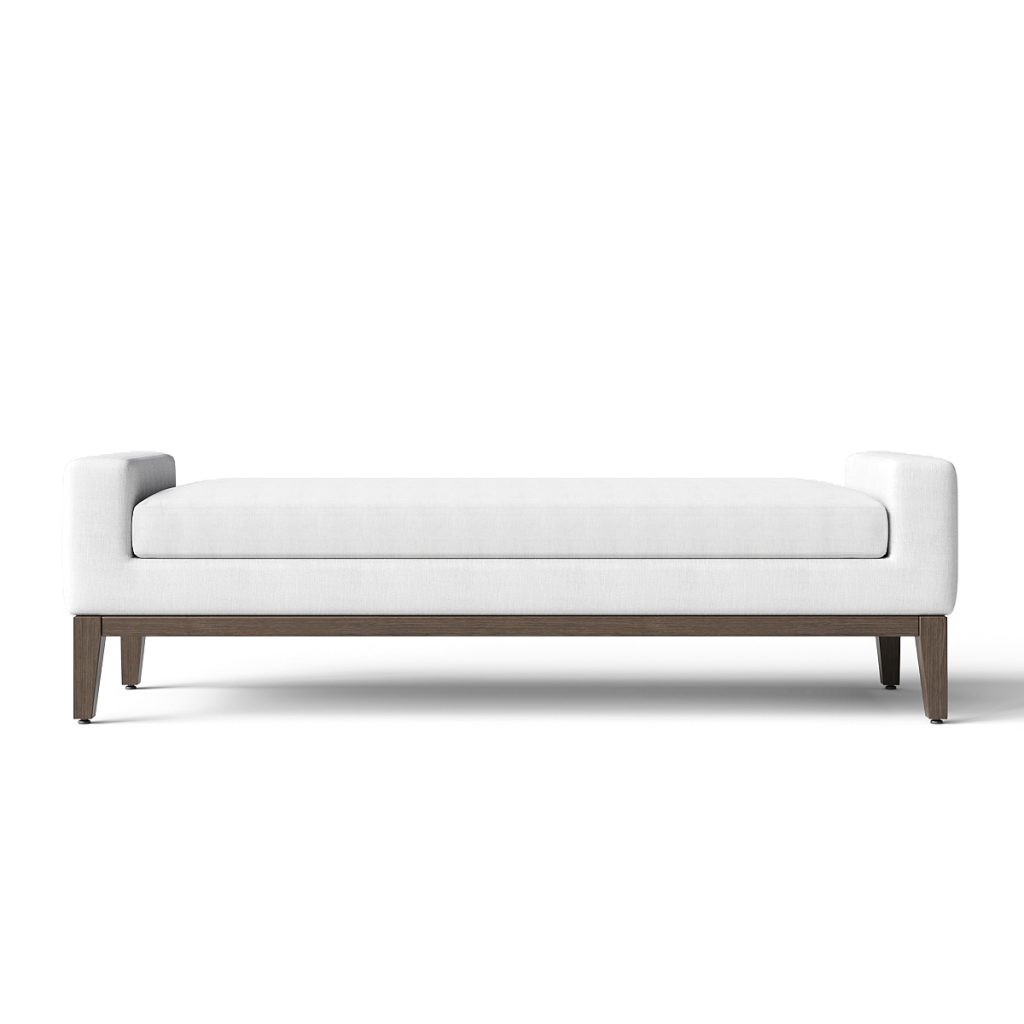
An entryway bench should be sturdy and inviting. In the American style tradition, it often features a solid wood frame (oak or walnut) with a comfortable seat—perhaps upholstered in leather or a durable fabric, perhaps left as bare wood for a more rustic feel. The bench should be low enough to sit on comfortably—typically 18 to 20 inches in height—and long enough to accommodate at least one person, ideally two.
Some benches offer storage beneath the seat—a lift-top compartment for gloves, scarves, or dog leashes. Others keep it simple, with a lower shelf for shoes or boots. Either way, the bench serves a purpose beyond seating: it contains the chaos of daily arrivals and departures.
The American Bench Aesthetic
In the American tradition, the bench is never fussy. It is honest. The joinery is visible. The wood grain is celebrated. The form follows function. A well-made bench in solid oak or walnut is a piece that will serve the household for decades, its seat worn smooth by generations of use.
Part Three: The Mirror and Coat Rack — Completion, Not Clutter
With the console table and bench in place, the entryway is already functional and warm. Two additional elements—the mirror and the coat rack—complete the picture without overwhelming it.
The Mirror — The Last Check
The mirror in the American entryway serves a practical purpose: a final check before you step out the door. Is your collar straight? Is there anything in your teeth? Does your coat sit right? But the mirror also serves a spatial purpose: it reflects light into the entryway, making the space feel larger and brighter. A well-placed mirror—leaning against the wall above the console table, or hung at eye level—doubles the visual space of the entryway without adding a single square foot.
The Coat Rack or Hall Tree — Orderly Arrival
In the American entryway, coats and hats are not left on the floor or draped over the banister. They are hung—neatly, conveniently, out of the way. A coat rack or hall tree provides a dedicated place for outerwear, keeping the entryway tidy without demanding the kind of commitment that built-in storage requires. For families with children, lower hooks invite little hands to hang their own backpacks and jackets, fostering independence and order from the very first step inside.
Part Four: The Finishing Layers — Light, Texture, and Life
The furniture provides the structure. The finishing layers provide the soul. These are the small, personal touches that transform an entryway from a functional passage into a welcoming room.
Light
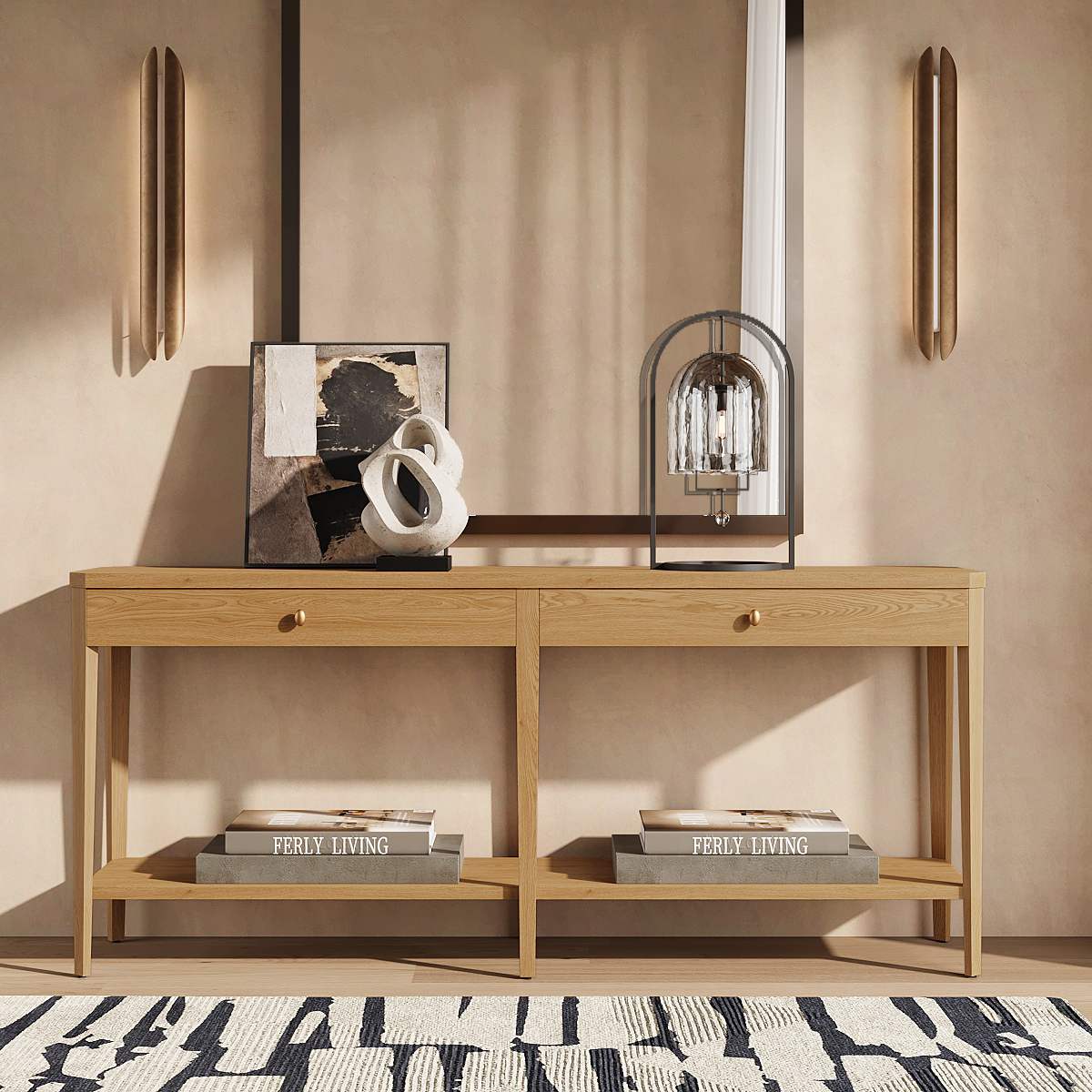
An entryway without light is a hallway. An entryway with light is a room. A small table lamp on the console table casts a warm glow that softens the space and makes it feel inhabited. If there is a mirror, consider placing a small sconce on either side—the light reflected in the mirror will brighten the entire space.
Texture
A woven basket beneath the bench for umbrellas. A ceramic bowl on the console for loose change. A wool runner on the floor that absorbs sound and adds warmth underfoot. These textures create a sense of depth and invitation that bare surfaces cannot achieve.
Life
A small vase of fresh flowers. A potted plant that thrives in indirect light. A branch of eucalyptus that releases its scent as you brush past. These living elements remind us that the entryway is not a museum—it is the threshold of a living home.
Part Five: The American Entryway — A Room of Its Own
The entryway is not a hallway to be rushed through. It is a room—the first room of your home, and the last. It deserves the same attention as any other space: the same quality of furniture, the same care in composition, the same intention behind every choice.
In the American style tradition, the entryway is characterized by:
Substance – Solid wood furniture that feels grounded and enduring
Welcome – A bench that invites you to sit, a mirror that helps you prepare
Order – A console that organizes your daily essentials, a rack that holds your coat
Warmth – Light, texture, and life that make the space feel lived-in and loved
A Final Thought: The First and Last Impression
The entryway is the only room in your home that you experience twice every time you leave and return. It is the first thing you see when you come home tired. It is the last thing you see when you head out into the world. When it is cluttered and uninviting, it adds to the weight of the day. When it is calm, beautiful, and functional, it lightens that weight.
A solid oak console table. A sturdy, welcoming bench. A mirror that catches the light. A rack for your coat. A lamp that glows warmly. These are not luxuries—they are daily gifts you give yourself, every single time you walk through the door.
The entryway: where the house says hello—and goodbye. Make it count.
Shop the furniture