American Furniture Material Decoded: Oak, Teak and Travertine Pairing Philosophy

In the world of fine American furniture, material selection is never arbitrary. Each wood, each stone is chosen not only for its beauty but for its purpose—its ability to perform in a specific environment, to age with grace, and to tell a story of craftsmanship. Among the most revered materials in the American furniture tradition are oak, teak, and travertine. Each occupies a distinct realm: oak anchors the interior, teak commands the outdoors, and travertine bridges the two with timeless elegance.
Thank you for reading this post, don't forget to subscribe!Part One: Oak — The Soul of the American Interior
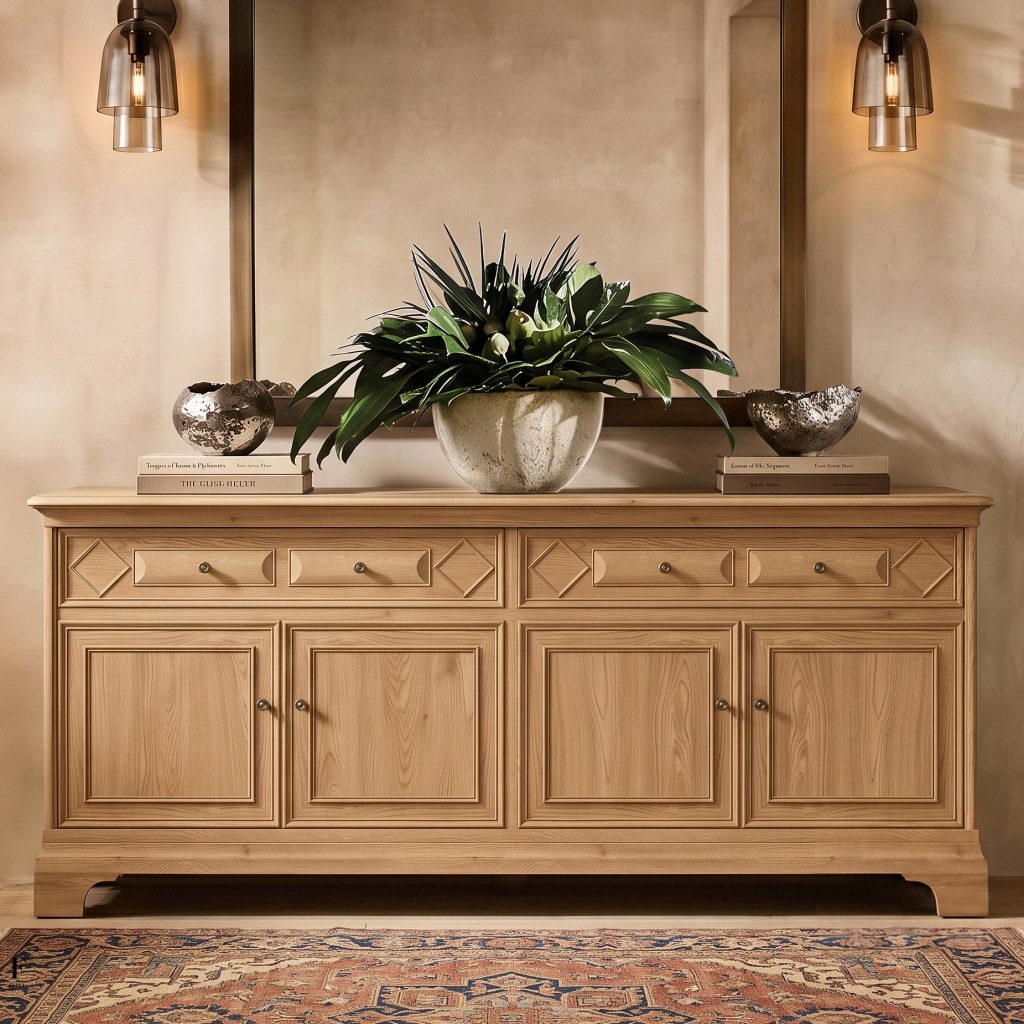
Oak has long been the backbone of American furniture making. Its presence is felt in the grand dining tables of New England farmhouses, the sturdy bookcases of East Coast libraries, and the custom cabinetry of modern American kitchens.
Why Oak Belongs Indoors
Oak in American Style
Oak’s warm tones and distinctive grain make it the quintessential American wood. It pairs effortlessly with the classic proportions of American design—the clean lines of Shaker cabinetry, the rolled arms of a Chesterfield sofa, the turned legs of a farmhouse table. In the American interior, oak is not a trend; it is a tradition.
| Indoor Application | Why Oak Excels |
|---|---|
| Dining Tables | Dense grain resists scratches; warm tone invites gathering |
| Custom Cabinetry | Takes finishes beautifully; ages with character |
| Bookshelves | Strong enough to bear heavy loads; timeless aesthetic |
| Bedroom Furniture | Stable structure; develops heirloom patina over time |
Part Two: Teak — The Master of the Outdoors
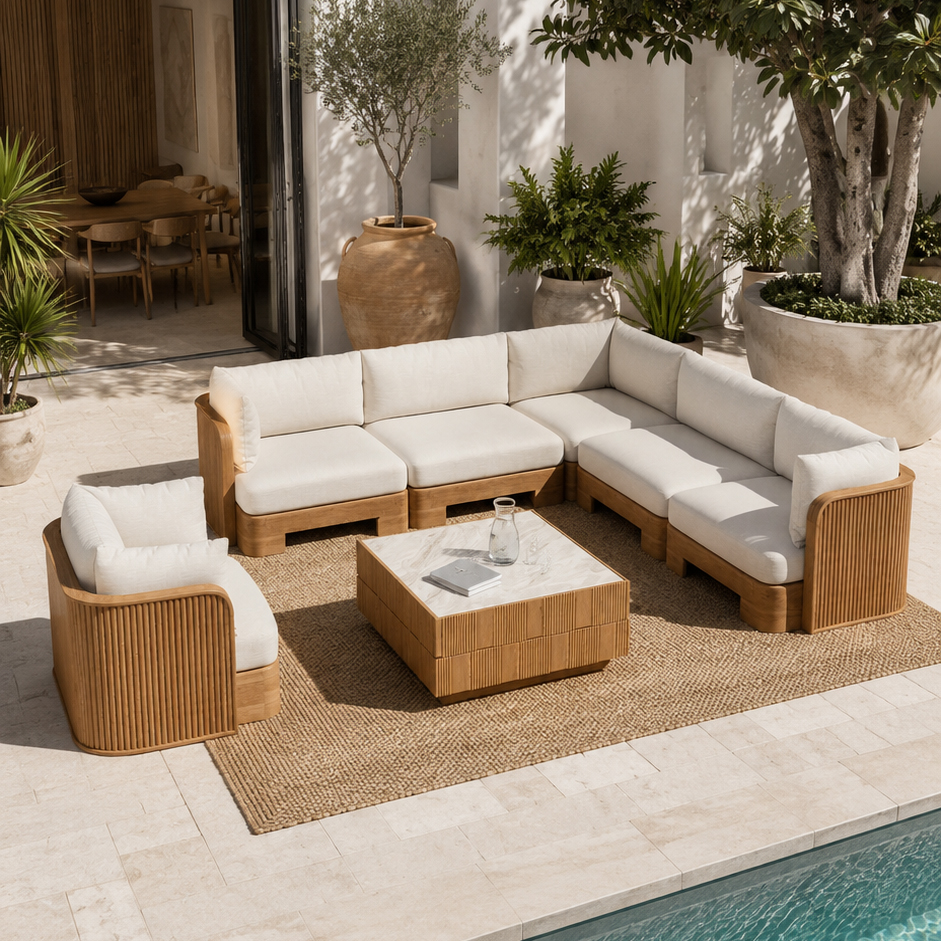
If oak is the soul of the American interior, teak is the undisputed king of the American outdoor living space. From seaside resorts in the Hamptons to poolside lounges in California, teak has earned its reputation as the finest wood for outdoor furniture.
The Science of Teak’s Superiority
Teak’s extraordinary outdoor performance comes from one source: its natural oils. The wood contains a high concentration of natural oils and resins that make it resistant to water, rot, and insects. Unlike other woods that require chemical treatments to survive outdoors, teak’s protection comes from deep within.
This natural defense system gives teak remarkable properties:
Weather Resistance – Teak does not shrink or warp significantly in response to changing weather conditions. It can withstand both summer heat and winter cold.
Decay Resistance – Its high oil content prevents rotting and insect infestation.
Longevity – A well-made teak outdoor bench, table, or chair can last for 70 years or more.
Salt Resistance – Teak is one of the only woods that can withstand saltwater environments, making it ideal for coastal homes.
The Aesthetic Evolution of Teak
One of teak’s most charming qualities is how it ages. Left untreated, teak gradually weathers from its initial golden-brown hue to a distinguished silver-gray patina. This transformation is not deterioration—it is maturation. The silver-gray finish is prized by designers for its understated elegance, its ability to blend with coastal and natural landscapes, and its quiet statement of quality.
| Outdoor Application | Why Teak Excels |
|---|---|
| Dining Sets | Withstands sun, rain, and temperature swings |
| Lounge Chairs | Naturally comfortable; ages beautifully |
| Canopy Beds | Structural integrity in all weather conditions |
| Poolside Furniture | Resists chlorine, salt, and moisture |
Part Three: Travertine — The Bridge Between Inside and Out
While oak stays inside and teak commands the outdoors, travertine occupies a unique position: it belongs everywhere. This natural stone, formed over millions of years through sedimentary deposits, has become one of the most sought-after materials in contemporary American design.
What Makes Travertine Special
Travertine is not marble, nor is it granite. It is a porous sedimentary rock—formed when hot spring or cold springs deposit calcium carbonate, trapping bubbles that create its characteristic honeycomb texture. This unique formation gives travertine its distinctive character: a low-gloss, matte surface with natural voids and variations that make every piece one of a kind.
Indoor-Outdoor Versatility
Travertine’s neutral, earthy tones—ranging from creamy beige to warm brown—complement both the honeyed warmth of oak and the golden-brown richness of teak. It provides a visual anchor that ties together spaces that might otherwise feel disconnected.
| Travertine Application | Best Paired With |
|---|---|
| Indoor Coffee Table | Oak flooring, oak cabinetry |
| Outdoor Dining Table | Teak dining chairs |
| Bathroom Vanity Top | Oak vanity cabinet |
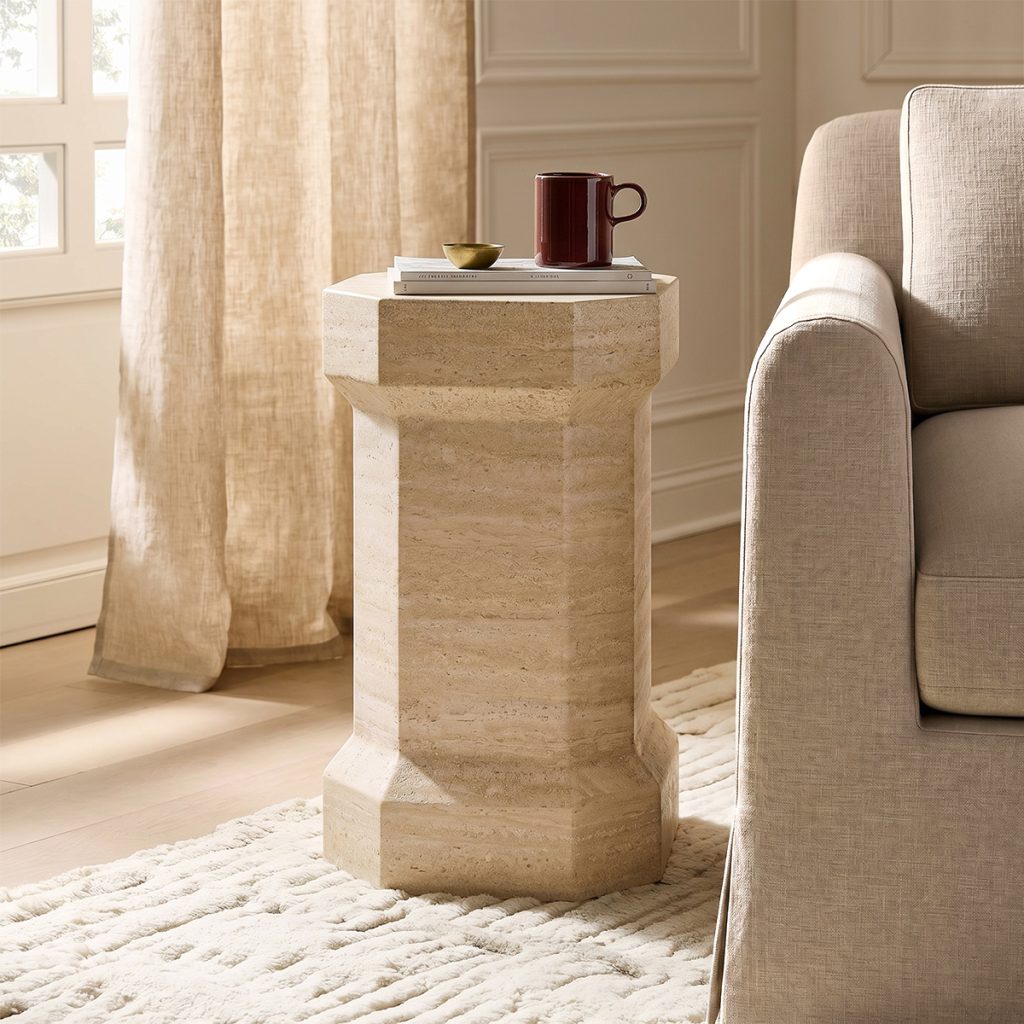
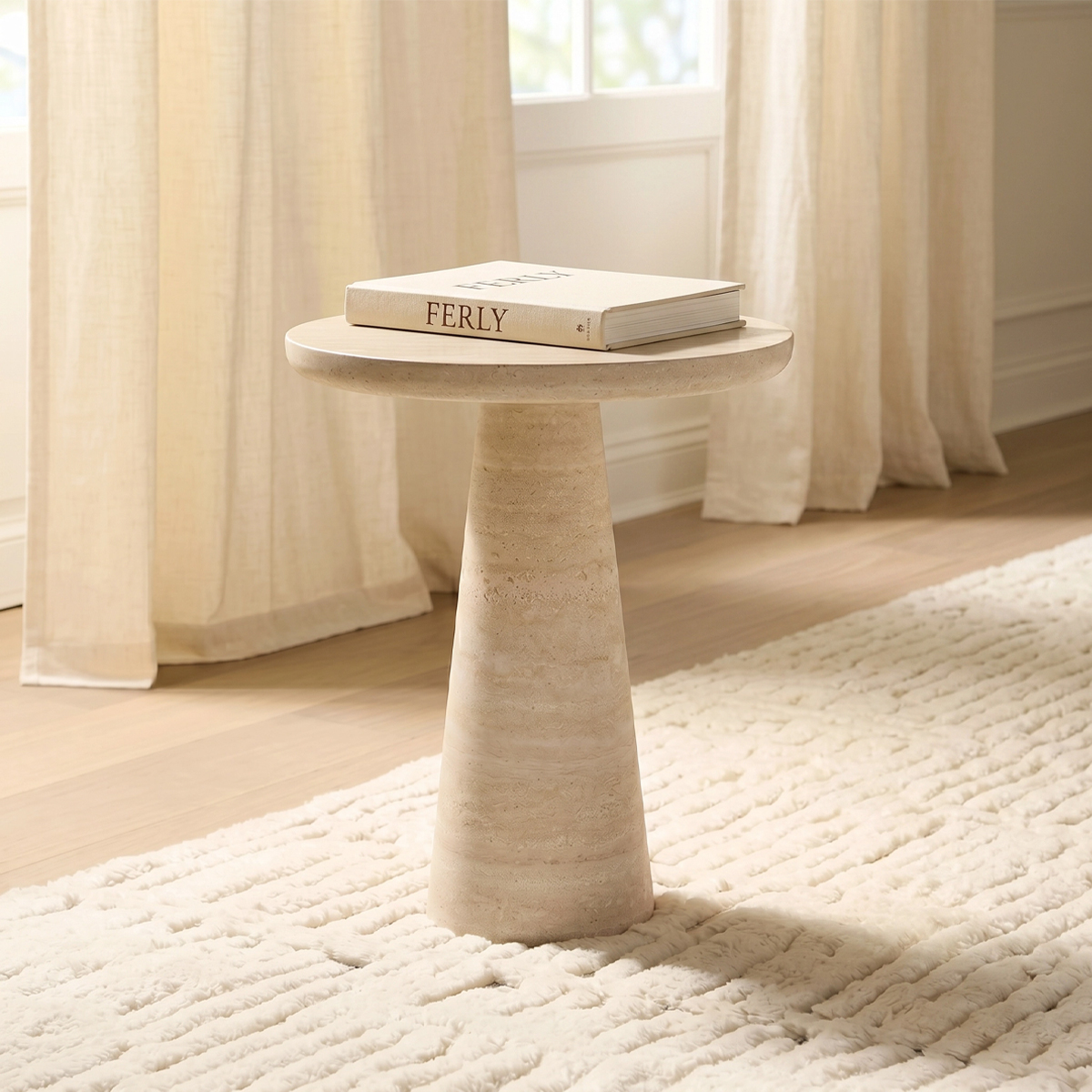
| Side Table (Indoor/Outdoor) | Either oak or teak furnishings |
Part Four: The Pairing Philosophy — Oak, Teak, and Travertine in Harmony
The true art of American furniture design lies not in using a single material, but in understanding how different materials speak to each other. Oak, teak, and travertine form a natural trio—each with its own voice, each with its own role, and together creating a symphony of texture, color, and purpose.
The Indoor-Outdoor Continuum
The most sophisticated American homes treat indoor and outdoor spaces not as separate realms, but as a continuum. Oak anchors the interior with warmth and tradition. Teak extends that warmth into the outdoor living area, where its durability meets the elements. Travertine appears in both spaces, creating visual consistency and material dialogue.
The Texture Triangle
Each material offers a distinct tactile experience:
Oak – Warm, substantial, with a grain that you can feel beneath your fingers
Teak – Smooth, oily to the touch, with a density that speaks of permanence
Travertine – Cool, matte, with natural voids that invite the hand to explore
When these textures are brought together—an oak dining table with a travertine serving surface, a teak lounge chair beside a travertine side table—the result is a space that engages all the senses.
The Color Palette
The three materials share a natural, earthy color language:
Oak – Honey, amber, warm beige
Teak – Golden-brown, deep amber, silver-gray (aged)
Travertine – Cream, warm beige, soft brown
This shared palette allows the materials to blend rather than clash. A home that combines oak, teak, and travertine feels cohesive, intentional, and deeply connected to the natural world.
Part Five: Practical Pairing Guide
For the Living Room
Foundation: Oak flooring and custom oak built-in shelving
Statement: A travertine coffee table at the center of the seating area
Accent: A teak console table (indoors) or a teak side table near the window
For the Dining Room
Foundation: A solid oak dining table with hand-cut joinery
Statement: A travertine serving board or sideboard top
Accent: Teak serving pieces or a teak bar cart
For the Outdoor Living Area
Foundation: A teak dining set or teak sofa set
Statement: A travertine outdoor coffee table or side table
Accent: Oak elements kept indoors but visible through large windows, creating visual continuity
For the Bathroom
Foundation: An oak vanity cabinet (properly sealed for moisture resistance)
Statement: A travertine countertop or basin
Accent: Teak bath mat or teak accessories
A Final Word: Materials with Purpose
The pairing of oak, teak, and travertine is not a coincidence of aesthetics—it is a philosophy of use. Oak belongs indoors, where its beauty can be preserved and its strength appreciated. Teak belongs outdoors, where its durability can shine and its natural oils can protect it from the elements. Travertine belongs everywhere, bridging the two worlds with its timeless, earthy elegance.
When you understand the why behind each material, you move beyond decoration into design. You create a home where every surface tells a story, every texture invites touch, and every material is exactly where it belongs.
Oak inside. Teak outside. Travertine everywhere. A home in harmony.
Shop the furniture