American Sunday Mornings: Family Time at the Dining Table, Breakfast Bar, and Coffee Corner


There is a particular quality of light that enters an American home on a Sunday morning. It is softer than the harsh glare of a weekday dawn. It filters through the windows slowly, as if it too is in no hurry. The house is quiet, save for the gentle hum of the refrigerator and the distant chirping of birds outside. And then, one by one, the family stirs.
Thank you for reading this post, don't forget to subscribe!This is the rhythm of a Sunday morning—a rhythm that unfolds across three distinct spaces in the American home: the coffee corner, the breakfast bar, and the dining table. Each plays its part in the ritual of togetherness, offering a stage for different generations, different moods, and different moments of connection.
Part One: The Coffee Corner — Where the Day Begins
It is 7:15 AM. The house is still wrapped in the quiet of early morning. The first person to emerge is usually the one who rises earliest—perhaps Dad, or Mom, or a teenage insomniac who has been scrolling on their phone in the dark.
They make their way to the coffee corner. This is not just a countertop with a coffee maker—it is a ritual space. The oak cabinet above holds mugs of various sizes and histories: the chunky one from a vacation in Maine, the delicate porcelain gifted by a grandmother, the faded mug that says “World’s Best Dad.” Below, a small wooden tray holds jars of coffee beans, each with its own story.
The ritual begins: grinding the beans, the sound of water heating, the slow pour of the first cup. The aroma spreads through the house like an invitation. By the time the first sip is taken, the quiet is no longer empty—it is expectant.
One by one, family members drift toward the coffee corner. Not necessarily to talk—not yet. Just to be near. A spouse stands beside, waiting for their own cup. A sleepy teenager shuffles in, accepts a mug without a word, and leans against the counter. The coffee corner is a place of parallel presence—being together without the need for conversation, a gentle start to the day.
This is where the morning begins to breathe.
Part Two: The Breakfast Bar — The Grazing Ground
By 8:30 AM, the house is alive. The quiet of the coffee corner has given way to the gentle chaos of a household waking up. The breakfast bar becomes the gravitational center of this energy.
The breakfast bar is not for formal meals. It is for grazing—a place where a bowl of cereal can sit for an hour, where a teenager can eat a bagel while scrolling through a phone, where a parent can steal a bite of toast between answering texts. It is the low-stakes, high-comfort space that accommodates the staggered rhythms of a Sunday morning.
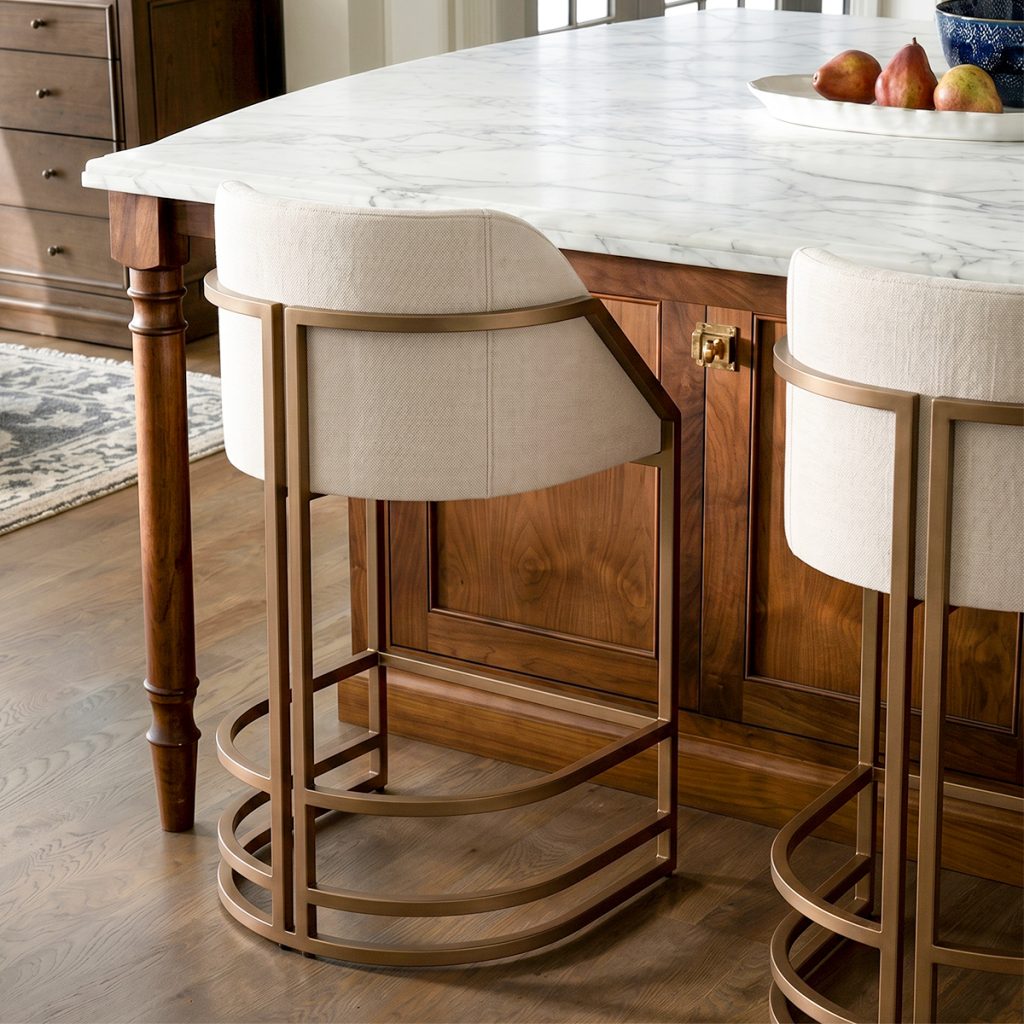
The bar stools—solid oak, with comfortable leather or fabric seats—invite lingering. A child sits cross-legged on one, reaching for a bowl of blueberries. A teenager uses the bar as a makeshift desk, finishing homework they should have done on Saturday. Mom stands on one side, assembling a platter of fresh fruit and pastries that she will eventually move to the dining table.
At the breakfast bar, conversations are fragmentary and unhurried:
“Did you finish that history paper?”
“What time is your soccer game later?”
“Mom, have you seen my charger?”
“These blueberries are really good.”
The breakfast bar is where the family checks in with each other. It is not the main event—but it is the gathering place that makes the main event possible. It is the warm-up, the prelude, the casual connection that prepares everyone for the meal still to come.
Part Three: The Dining Table — The Gathering Place
By 10:00 AM, the household begins to gather at the dining table. This is the main event—the moment when everyone sits down together, leaving behind the scattered energy of the breakfast bar and the quiet intimacy of the coffee corner. The dining table brings order to the morning and creates space for a meal that is about far more than food.
The table is set with intention: a simple centerpiece of flowers or greenery from the garden, plates and silverware arranged in a relaxed but deliberate manner, and napkins placed at each setting. The food is a collection of contributions—fresh fruit from the breakfast bar, a warm dish of scrambled eggs, a basket of pastries, and perhaps a plate of bacon or roasted vegetables.
This is where different generations connect. At the breakfast bar, everyone was in their own orbit. At the dining table, they face each other. The grandmother asks about school. The teenager answers—reluctantly at first, then with more detail as the conversation warms. The younger child demonstrates a new skill they have learned. Stories are shared. Laughter erupts. The morning finds its rhythm.
The dining table is the anchor of a family’s shared life. It bears witness to birthdays, holiday feasts, and ordinary Sundays. The solid oak surface, the handcrafted joinery—they are not just aesthetics; they are symbols of continuity. This table has seen generations of elbows resting in the same spots, of hands reaching for the same salt shaker, of eyes meeting across the same span of wood.
At the dining table, no one is rushing. The pace is unhurried, the conversations meander, and the food is savored. This is the opposite of a weekday breakfast, where everyone grabs a bite and runs out the door. This is a meal that says: We have time. We are together. This matters.
The Furniture That Makes It Possible
These three spaces are not just rooms—they are stages for family life. And the furniture within them is not just decoration—it is the infrastructure of connection.
The Coffee Corner
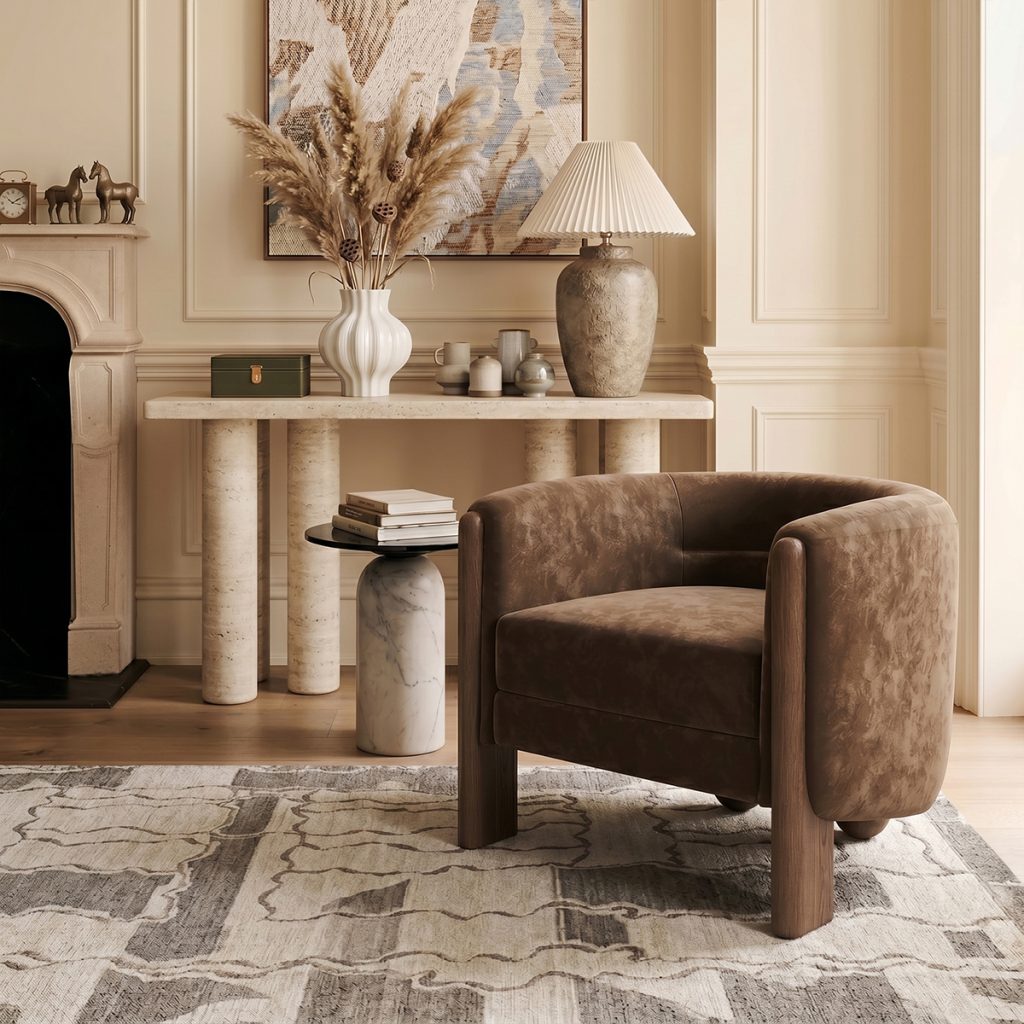
A small console table or sideboard (custom or ready-made) that serves as the anchor
An oak wall cabinet above for mugs and coffee supplies
A countertop large enough to hold a coffee maker and a tray
A bar stool or two for those who want to sit and linger
The Breakfast Bar
A solid wood countertop (oak or walnut) with comfortable seating height
Bar stools with comfortable seats and footrests
Open shelving or a nearby cabinet for quick-access bowls, plates, and snacks
The Dining Table
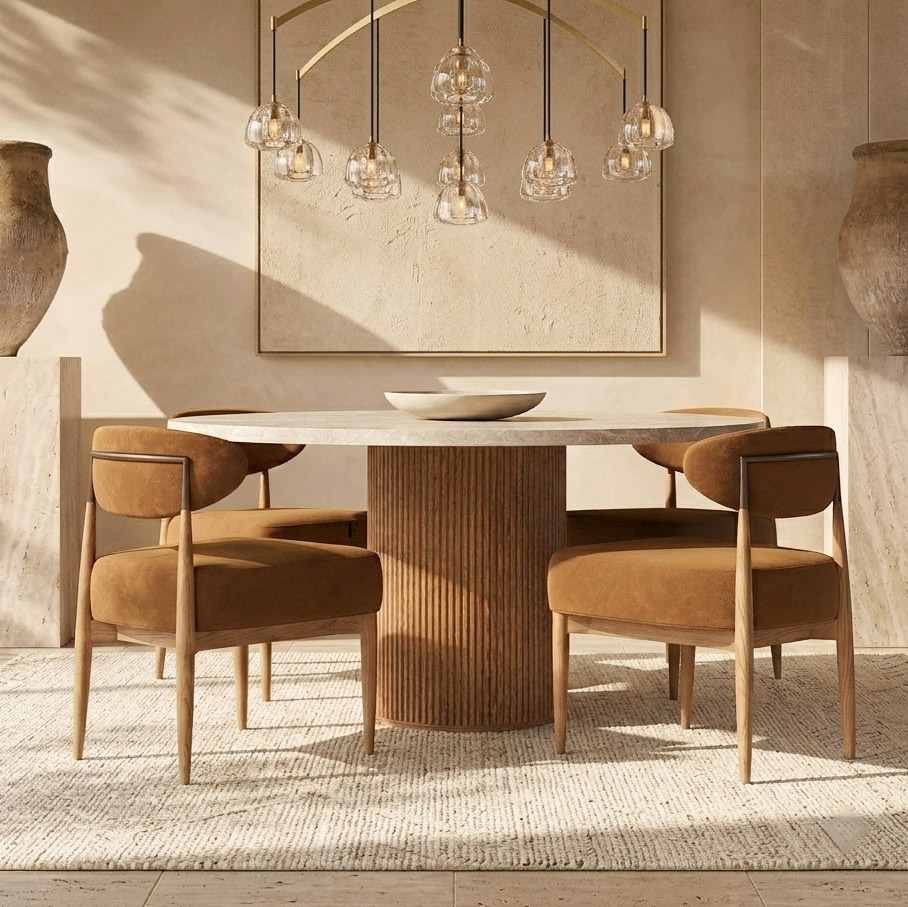
A substantial dining table—round or rectangular, always in solid oak or walnut—that seats the whole family
Dining chairs that are comfortable enough for a long Sunday meal
A sideboard or buffet nearby for serving dishes and extra storage
The Rhythm of Togetherness
What makes a Sunday morning American is not the style of the furniture, but the rhythm of how it is used. The coffee corner offers solitude within togetherness. The breakfast bar offers casual connection. The dining table offers intentional gathering. Each space serves a different purpose, and each purpose is equally valuable.
Variety and Flexibility
Ready-made furniture comes in countless styles, colors, and sizes. You can see it in person, test its comfort, and make a confi
The coffee corner is where the day begins—quietly, individually, with the promise of the hours ahead. The breakfast bar is where the household checks in—fragmentary, chaotic, and full of life. The dining table is where the family gathers—intentionally, together, and fully present.
A Final Thought: The Sunday That Lingers
The best Sunday mornings are not the ones that end quickly. They are the ones that linger—the ones where the coffee corner sees two or three refills, where the breakfast bar hosts a late-afternoon snack, where the dining table remains set long after the plates have been cleared, because no one is quite ready to leave.
This is what American furniture is designed to support: not just dining, but lingering. Not just seating, but staying. Not just meals, but memories.
From the coffee corner to the breakfast bar to the dining table—a home that holds a family.
Shop the furniture