Space American Style: Creating Grand Home Aura with Classic Furniture

Introduction
Part One: The Foundation — Space Itself
Before a single piece of furniture enters a room, Space American Style has already begun its work. It begins with air — the willingness to leave room unfilled, to let walls stand without art, to allow a corner to remain empty. In the American grand tradition, space is not a problem to be solved. It is the raw material of comfort.
Thank you for reading this post, don't forget to subscribe!The Principle of Generosity
European grand styles often prize compression — intricate details packed into every inch. Space American Style goes the other way. It prizes release. High ceilings, wide doorways, halls that allow two people to pass without turning sideways, windows that bring the outside in. This is furniture’s stage. And the stage must be worthy of the actors.
Light as Material
In the American grand home, natural light is treated as a design material. Large windows — often floor-to-ceiling — flood rooms with illumination that changes through the day. Classic furniture is placed to receive this light: a wingback chair angled toward the morning sun, a writing desk positioned to catch the afternoon glow, a dining table centered beneath a window that frames the garden beyond.
Part Two: The Actors — Classic Furniture Pieces
With the stage set, we turn to the furniture itself. Space American Style relies on a vocabulary of classic forms — pieces that have proven their worth over decades and centuries. These are not antiques (though they could be), but pieces that carry the DNA of enduring design.
The Substantial Sofa
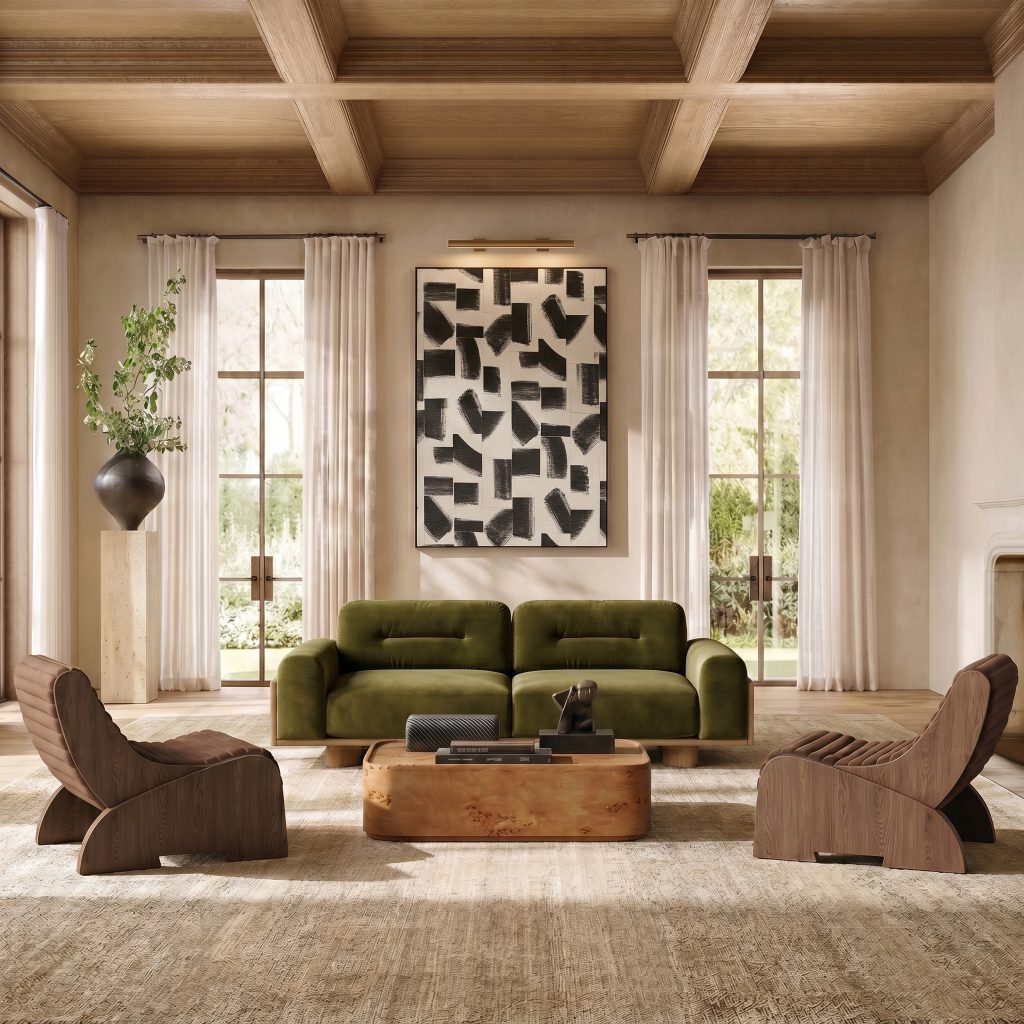
In a grand American room, the sofa does not apologize for its size. It is deep, wide, and inviting — often a chesterfield with its rolled arms and tufted back, or a tuxedo sofa with clean, tailored lines. Upholstered in linen, velvet, or leather, it sits at the heart of the conversation area. It does not hug the wall; it floats, creating a second room within the room.
The Generous Dining Table
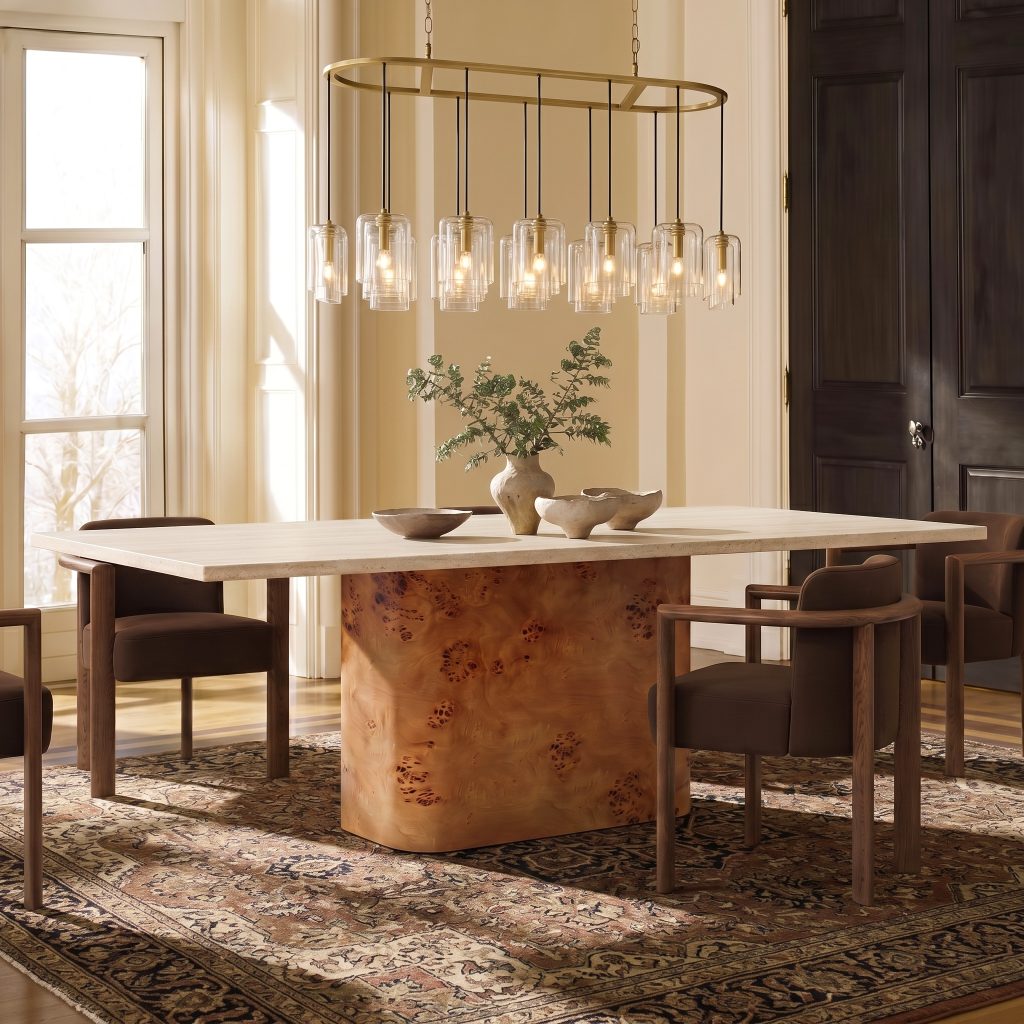
Space American Style does not cram eight chairs around a table built for six. It chooses a table that allows elbows to remain unjostled, servers to pass between chairs, and centerpieces to stretch without crowding. The farmhouse table — wide-planked, substantial, often in oak or pine — is a classic choice. So is the round pedestal table, which eliminates hierarchy and invites every voice into the conversation.
The Reading Chair
Every grand American room contains at least one chair that exists solely for the pleasure of sitting with a book. The wingback — tall-backed, side-winged, designed to block drafts from poorly sealed colonial windows — has become the archetype. Placed by a window or beside a fireplace, often paired with a floor lamp and a small side table, it is a room within a room. A universe contained in a single seat.
The Credenza or Sideboard
A grand room needs surfaces for display and storage. The credenza — low, long, often with closed storage below and an open surface above — provides a stage for lamps, books, flowers, and art. In a dining room, the sideboard holds serving pieces and linens. In a living room, a bombe chest or a highboy adds vertical interest and closed storage.
Part Three: The Dialogue — Arrangement as Language
Furniture in the Space American Style does not line the walls like soldiers awaiting orders. It converses. It forms clusters. It creates zones within a larger whole.
The Conversation Area
In a grand living room, sofas and chairs face one another — not all pointing at a television. Two sofas face each other across a coffee table. Four armchairs gather around a round ottoman. A pair of wingbacks angle toward the fireplace. These arrangements say: we are here to talk, to listen, to be together.
The Axis
Grand rooms often have natural axes — the line from the door to the far window, the path from the fireplace to the opposite wall, the sightline from the hallway through the living room to the garden beyond. Classic furniture acknowledges these axes. A sofa placed along an axis, a console table centered on one, a pair of chairs flanking an opening — these gestures give a room its sense of order and inevitability.
The Anchor
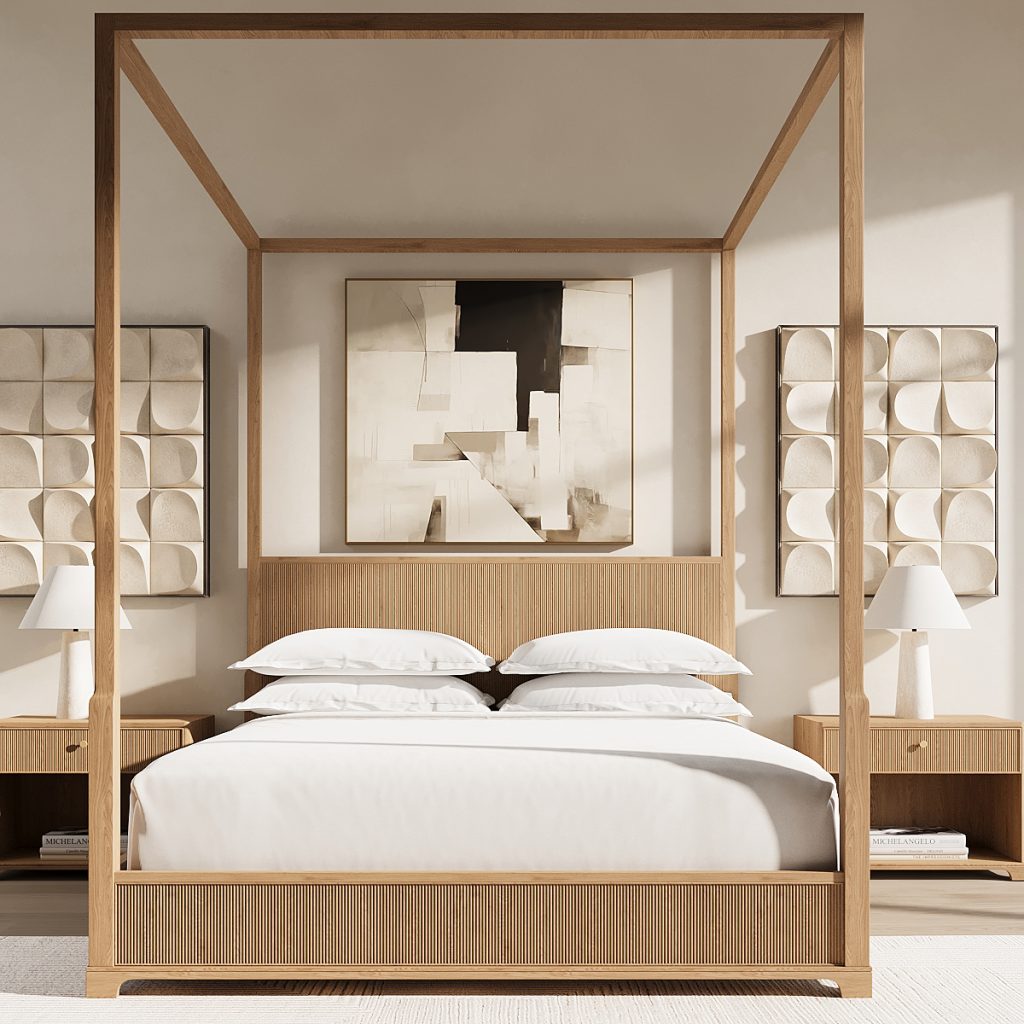
Every grand room needs an anchor — a piece large enough and confident enough to hold the space together. Often it is the sofa. Sometimes it is a grand piano, a monumental bookcase, or a four-poster bed. The anchor does not dominate; it steadies. Everything else relates to it, and through it, to the room as a whole.
Part Four: The Details — Finishing the Picture
Space American Style trusts its furniture enough to keep other elements restrained. But restraint is not absence. It is editing.
Rugs
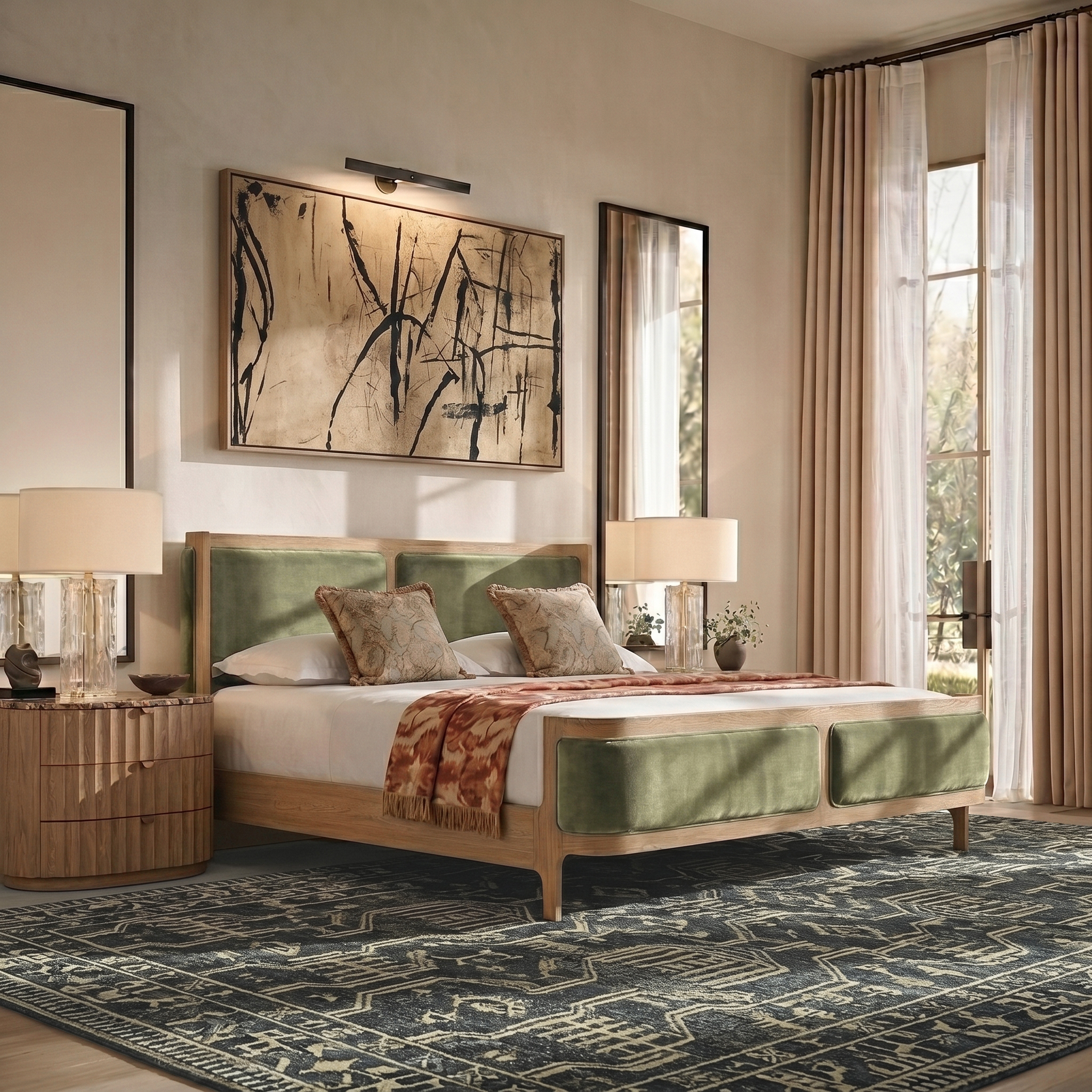
A grand room requires a rug large enough that all the front legs of the seating group rest upon it. A rug that floats in the middle of the floor, surrounded by bare wood, looks timid. A rug that anchors the conversation area looks intentional.
Lighting
Lamps in Space American Style are not afterthoughts. They are architectural. Floor lamps stand beside reading chairs. Table lamps sit on end tables and consoles. Picture lights illuminate art. And above it all, a chandelier or a grand pendant defines the vertical space, drawing the eye upward to the ceiling that the architect took such care to craft.
Art and Objects
Walls in a grand room are not wallpaper. They are galleries. A single large painting, or a carefully hung salon-style cluster, gives the eye a place to rest and a reason to linger. On surfaces — the credenza, the coffee table, the mantel — a few well-chosen objects appear: a stack of books, a ceramic vase, a small sculpture. Not dozens. Not clutter. Just enough to say: someone lives here, and someone cares.
Part Five: The Feeling — Grandeur Without Formality
The greatest achievement of Space American Style is this: a room that feels grand without feeling stiff. A room where you can put your feet on the coffee table (if the coffee table is substantial enough to take it). A room where a child can curl up on the sofa with a blanket. A room where a dinner party can spill into the living room after the plates are cleared.
This is the genius of classic American furniture. It does not demand that you behave. It invites you to live.
A Final Word
Space American Style is not about buying a specific list of pieces. It is about a way of seeing rooms — as stages for life, as collections of moments, as places where furniture serves not as decoration but as companion. The grand home aura is not achieved through expense alone. It is achieved through intention. Through choosing pieces that have earned their place over time. Through leaving space for air to move and light to fall. Through trusting that a room designed with generosity will be inhabited with joy.
Space. Light. Furniture. Life.
Shop the furniture